#Gemini
#Gemini 3.8 Flash
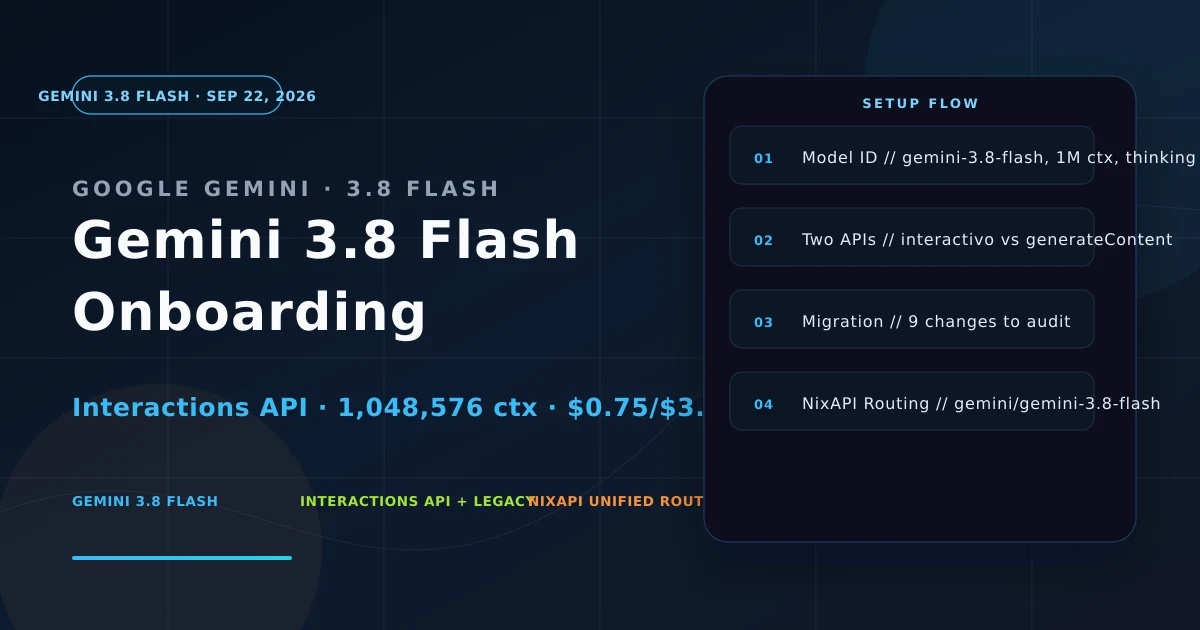
Google released Gemini 3.8 Flash on September 22, 2026. The model ID is gemini-3.8-flash, with native 1,048,576 token context, 65,536 token output, and tunable thinking level (low/medium/high). Google simultaneously elevated the new Interactions API as the recommended primary path (server-side state via previous_interaction_id + steps timeline), while keeping generateContent as legacy. This article covers model specs, intro pricing ($0.75/$3.75 through Dec 31, 2026), the two API shapes, the 9-item migration list (including required call_id/name fields and thought-signature preservation), code examples, and the NixAPI integration strategy.
#StepFun
#Step 5 Preview
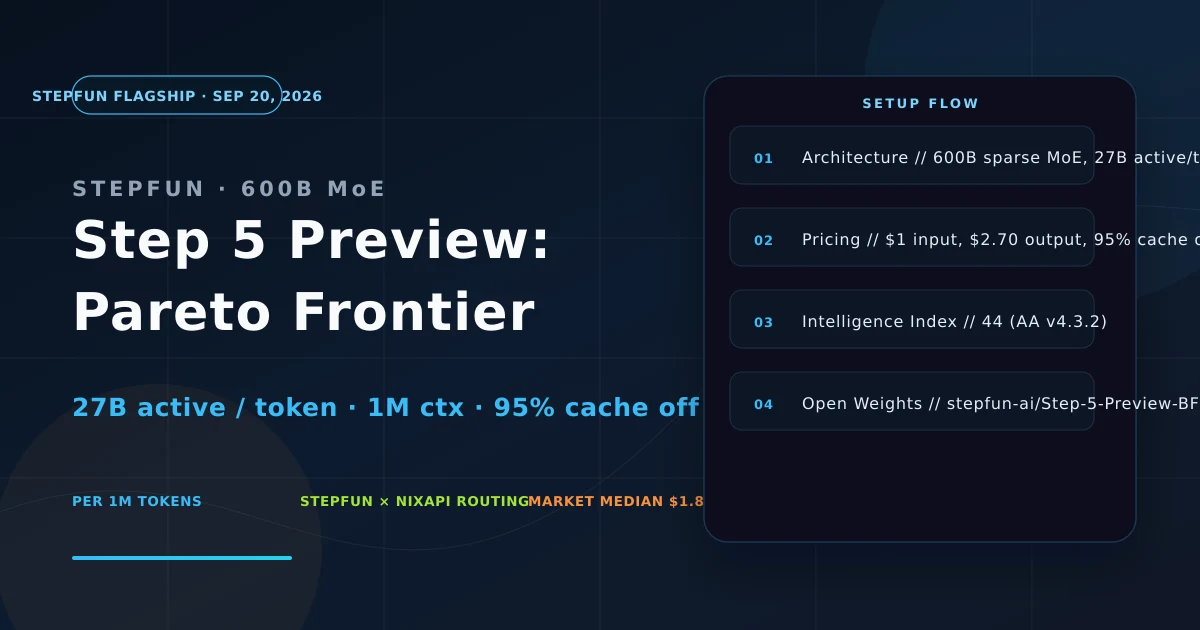
On September 20, 2026, StepFun released Step 5 Preview — a 600B-parameter sparse MoE with only 27B active per token, 1M-token context, native vision input, and an Artificial Analysis Intelligence Index of 44 (tied with Kimi K3 Max). API pricing: $1.00 input / $2.70 output per MTok with a 95% cache discount; open-weights release scheduled for October 15. This article dissects architecture, pricing, benchmarks, market positioning, and what global developers should do.
#LLM API
#Pricing
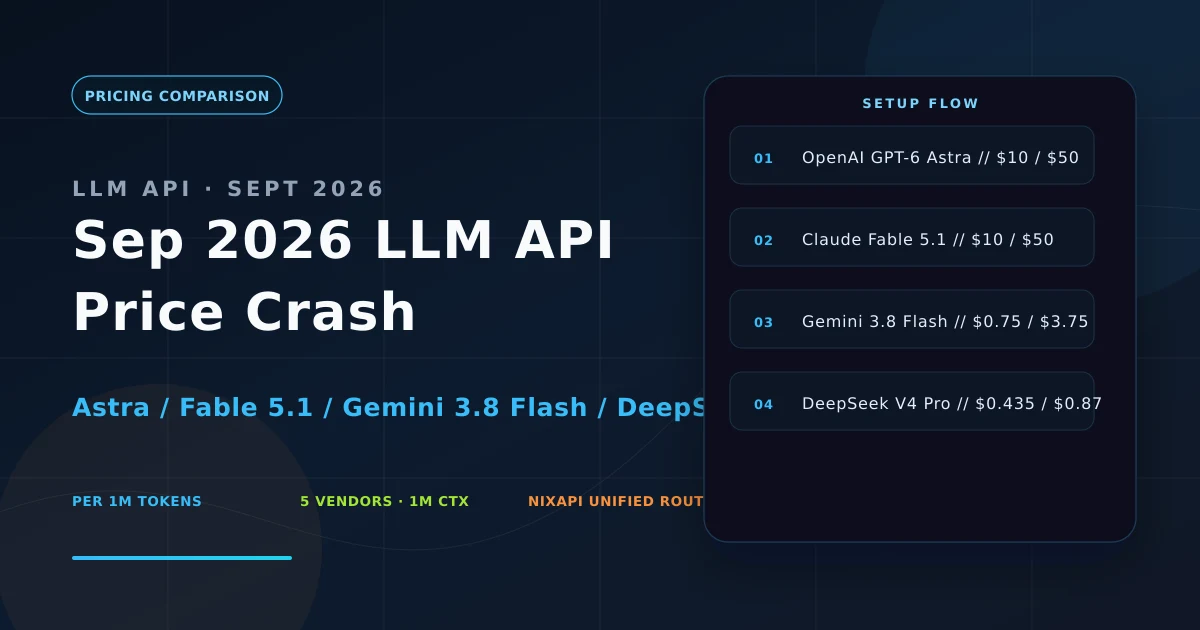
In the first week of September 2026, OpenAI GPT-6 Astra, Anthropic Claude Fable 5.1, and Google Gemini 3.8 Flash launched within days of each other — plus Sonnet 5 pricing went permanent and DeepSeek V4 Pro slashed rates. This article gives a full per-million-token price comparison table, cache pricing, context windows, real benchmark numbers, and a unified-routing strategy via NixAPI.
#OpenAI
#Astra
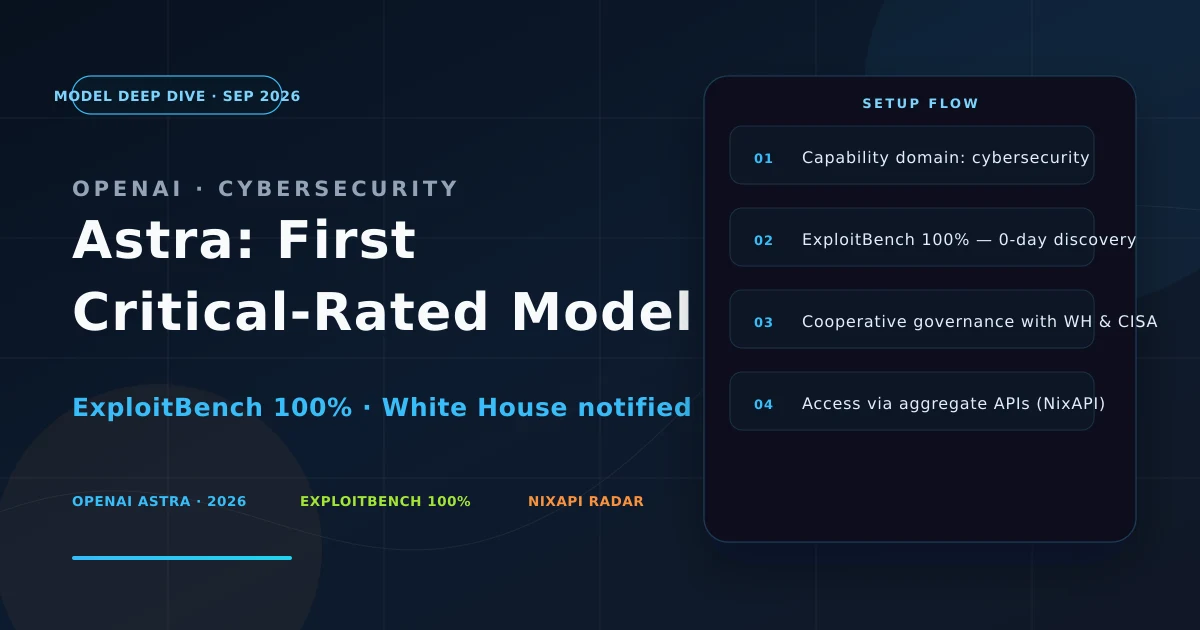
OpenAI released Astra on September 1, 2026 — the first model OpenAI has classified as Critical for cybersecurity. It scored 100% on ExploitBench and can autonomously discover 0-day vulnerabilities. OpenAI notified the White House, delayed the rollout, and gated access. This article dissects Astra's capabilities, ExploitBench's significance, the new cooperative-governance pattern, current API status, and how to prepare via aggregate API platforms like NixAPI.
#DeepSeek
#API Pricing
DeepSeek V4 Pro API output price jumps from $0.87 to $3.96 per million tokens—a 4×+ increase. Deep dive into the new peak/off-peak pricing, cost impact, and developer mitigation strategies.
#Google
#Gemini
Google launches Gemini 3.7 Flash just 3 weeks after 3.6 Flash, with big benchmark gains on coding and agentic workflows and an aggressive introductory API price of $0.75/M input tokens.
#OpenPencil
#NixAPI
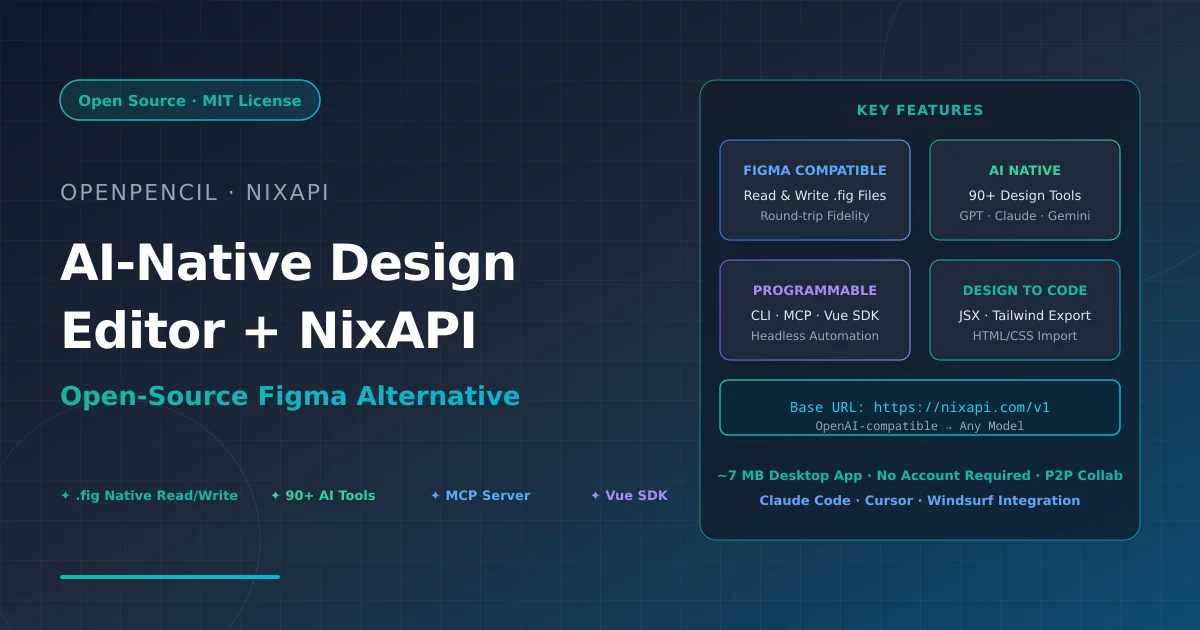
OpenPencil is an open-source AI-native design editor that reads .fig files natively. This guide covers AI Chat setup, MCP Server integration, and CLI usage with NixAPI for cost-effective GPT, Claude, and Gemini access.
#AI API
#Price War
From GPT-5.6 Luna to Grok 4.5 to Kimi K3, AI model prices have dropped 80% in 6 months. This guide covers the latest July 2026 pricing table, model routing strategies, and production-ready cost optimization code.
#Kimi K3
#Moonshot AI
Moonshot AI releases Kimi K3, the first open-source 3-trillion-parameter model. A complete developer guide covering API integration, performance benchmarks, and cost analysis.
#GPT-5.6
#OpenAI
The OpenAI GPT-5.6 family includes Sol, Terra, and Luna. This article provides a technical deep dive into architecture, reasoning mechanisms, coding benchmarks, and enterprise agent workflows, plus an automated tier selection scheme using NixAPI.
#GPT-5.6
#Sol
On July 9, 2026, OpenAI officially launched the GPT-5.6 family (Sol / Terra / Luna) for general availability. Sam Altman claims flagship Sol achieves 54% better token efficiency on agentic coding tasks. This article provides a deep comparison across pricing, coding performance, reasoning capabilities, and context windows, with cross-reference to Claude Sonnet 5 and Meta Muse Spark 1.1. Includes NixAPI integration examples.
#Meta Muse Spark 1.1
#Meta Model API
On July 9, 2026, Meta opened Muse Spark 1.1 API to developers for the first time via the Meta Model API, offering a 1M token context window, multimodal reasoning, OpenAI SDK-compatible endpoints, and aggressively priced at $1.25/$4.25 per million tokens. This article provides complete Python integration examples, a deep comparison with OpenAI/Claude APIs, and a unified NixAPI access solution.
#Claude
#Anthropic
Claude Sonnet 5 launched on June 30, 2026, as Anthropic's most agentic Sonnet model. This article analyzes its benchmarks, pricing strategy, agentic capabilities, and developer integration from an engineering perspective.
#Google
#Gemini
Google released Nano Banana 2 Lite on June 30, 2026, the fastest and most cost-efficient model in the Gemini Image family. This article analyzes its positioning, pricing, use cases, and developer integration.
#OpenAI
#GPT-5.6
OpenAI's GPT-5.6 series introduces three tiered models: flagship Sol, balanced Terra, and economical Luna. Sol features max reasoning and ultra sub-agent modes, but the Trump administration restricted public access. Deep analysis of technical specs, API pricing, safety architecture, and implications for global developers.
#AI
#Google
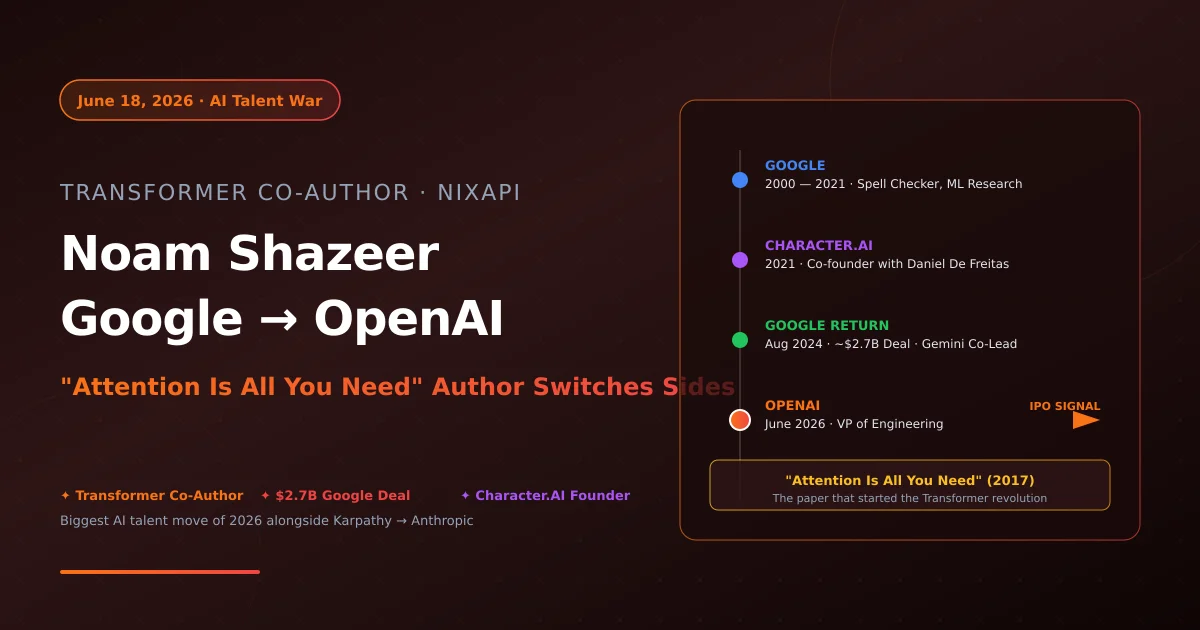
In June 2026, Google DeepMind faces an unprecedented talent drain: Nobel laureate John Jumper joins Anthropic, Transformer co-inventor Noam Shazeer returns to OpenAI, and Gemini core researchers Jonas Adler and Alexander Pritzel follow suit. This article provides an in-depth analysis of the strategic dynamics behind the AI talent war.
#Claude Code Desktop
#NixAPI
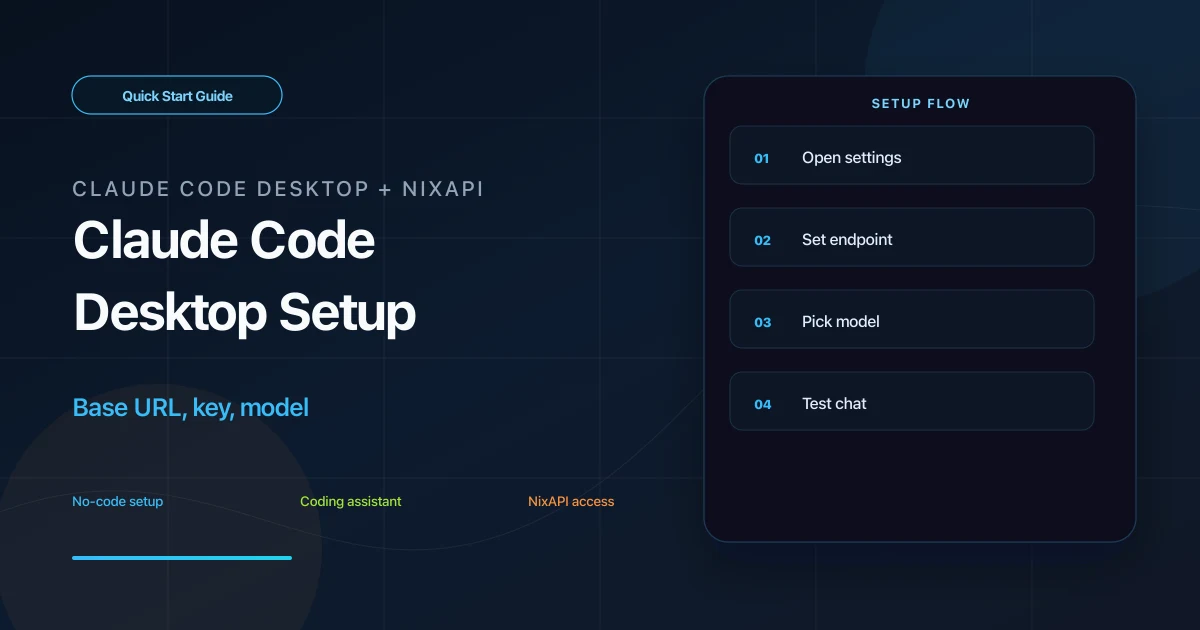
Configure Claude Code Desktop with a third-party Base URL, API Key, and model ID, then verify calls to Claude, GPT, Gemini, and other models.
#Claude Code
#NixAPI
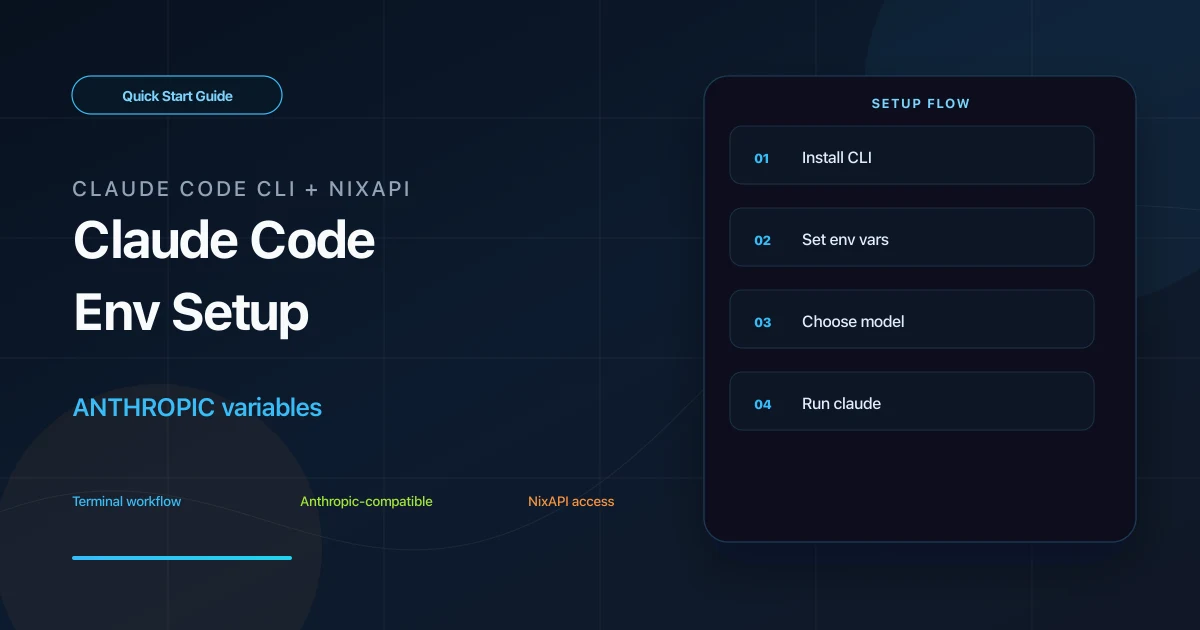
Use ANTHROPIC_BASE_URL, ANTHROPIC_API_KEY, and ANTHROPIC_MODEL to make Claude Code CLI call a third-party API, including the no-/v1 Base URL detail.
#Codex CLI
#NixAPI
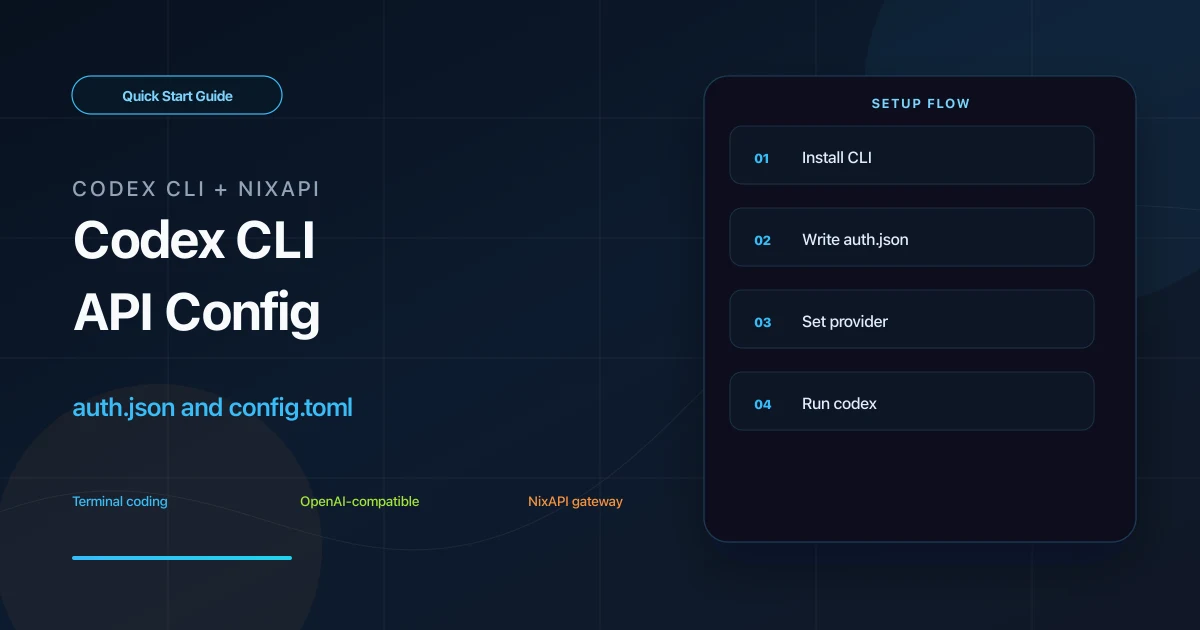
Install Codex CLI locally, configure a third-party OpenAI-compatible API with auth.json and config.toml, and verify terminal coding assistant calls.
#Codex Desktop
#NixAPI
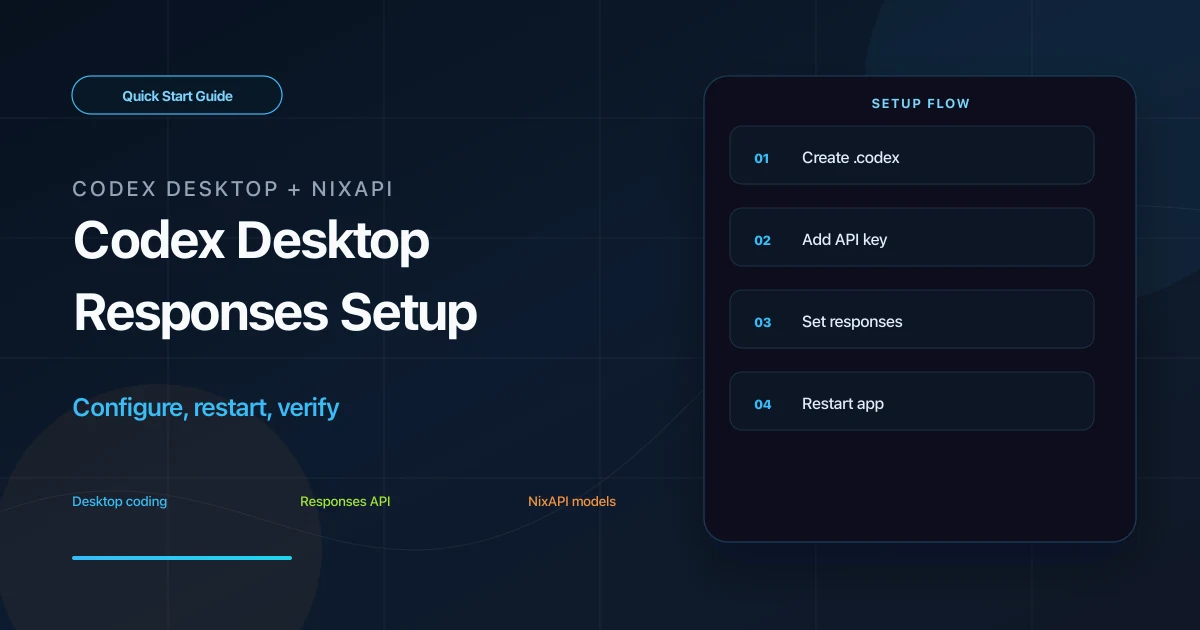
Configure Codex Desktop with auth.json and config.toml, including base_url and wire_api=responses, to use a third-party OpenAI-compatible API.
#Coze
#NixAPI
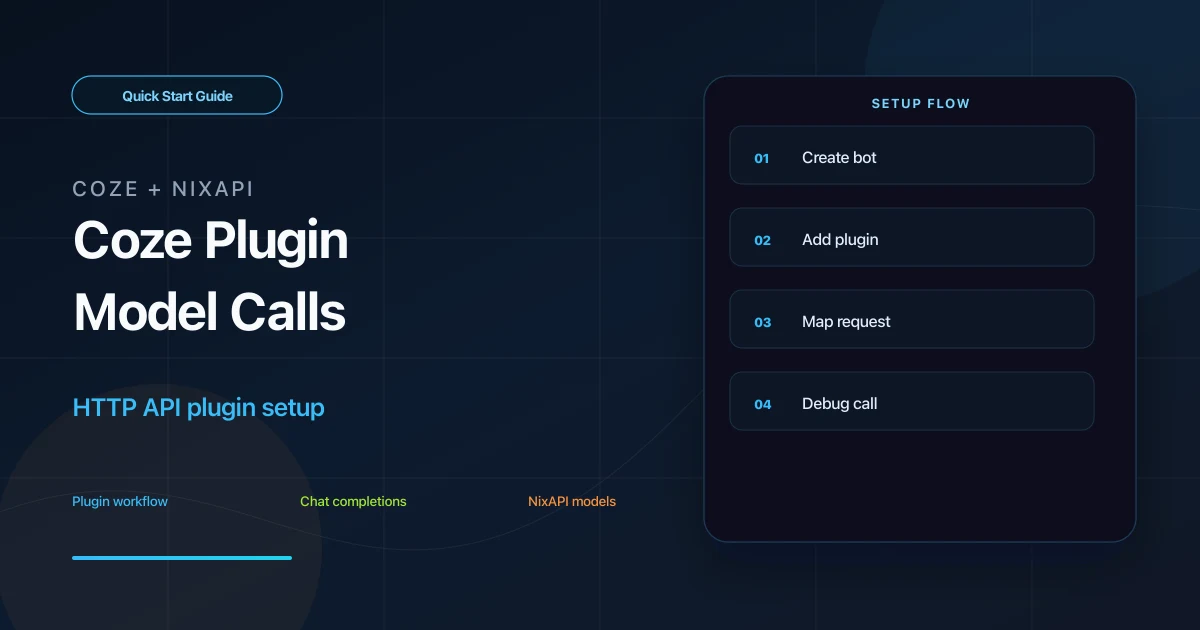
Create an HTTP API plugin in Coze, call a third-party chat completions endpoint, and let your bot use GPT, Claude, Gemini, and other models.
#Cursor
#NixAPI
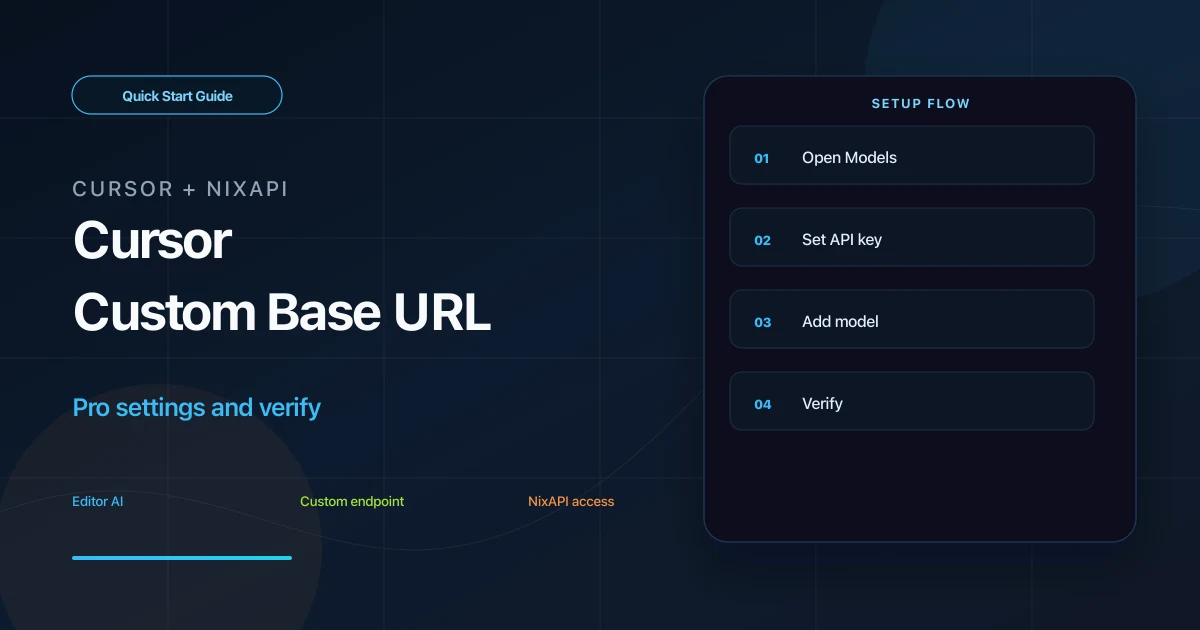
Configure a third-party API Key and Override OpenAI Base URL in Cursor Pro, add Claude, GPT, Gemini, and other models, then verify the setup.
#Dify
#NixAPI
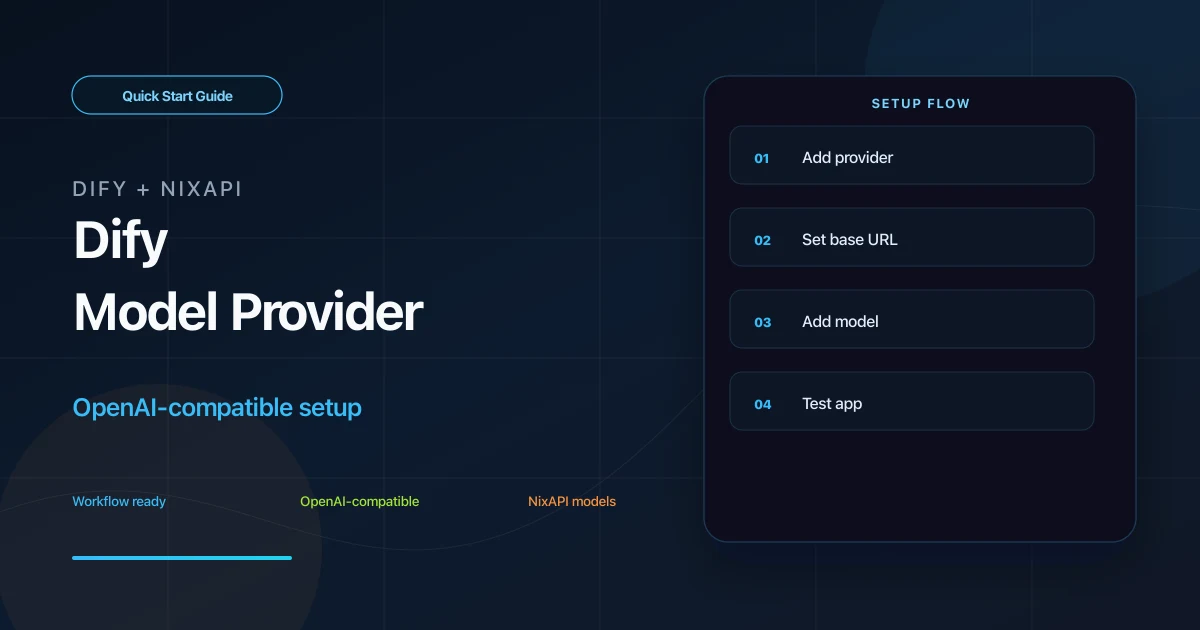
Install the OpenAI-API-compatible provider in Dify, enter a third-party Base URL, API Key, and model name, then verify app and workflow calls.
#Hermes Agent
#NixAPI
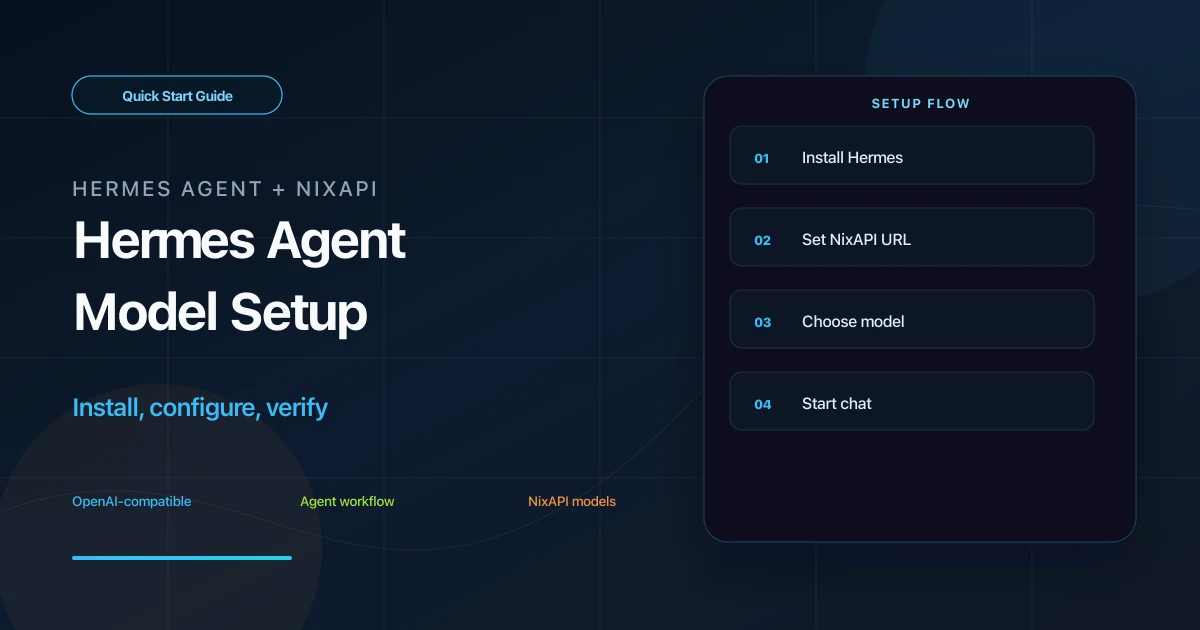
Install Hermes Agent, configure a third-party OpenAI-compatible API, choose a model, and verify that terminal chat works correctly.
#NextChat
#NixAPI
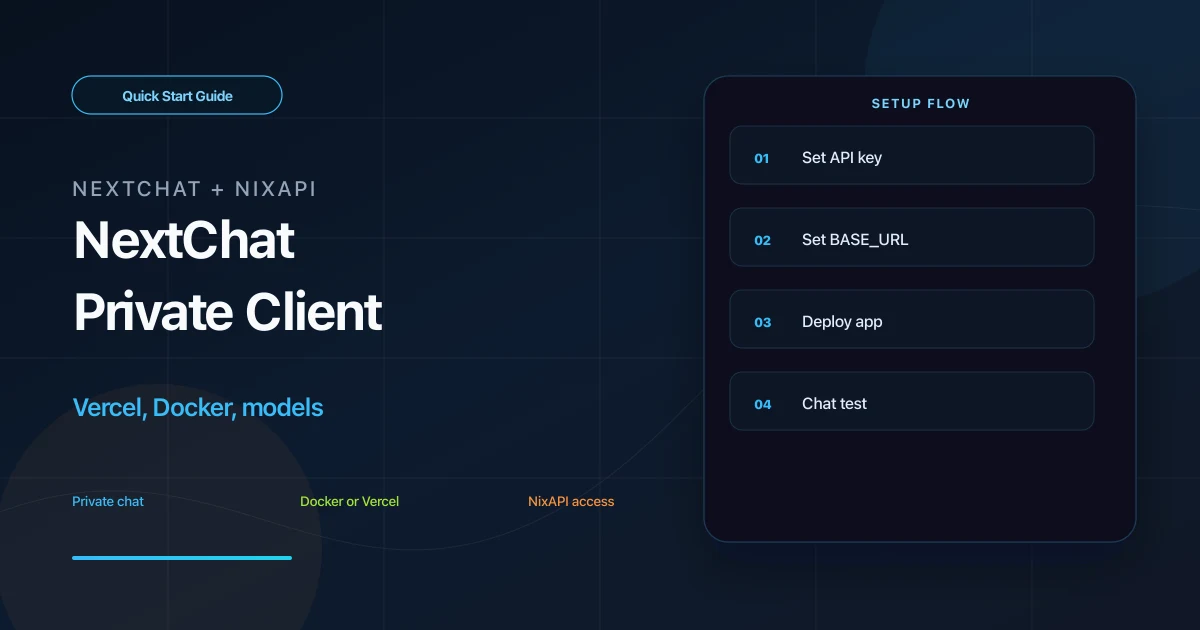
Deploy a private NextChat client with Vercel or Docker, connect it to a third-party API, switch models, and avoid the common BASE_URL /v1 issue.
#OpenCode
#NixAPI
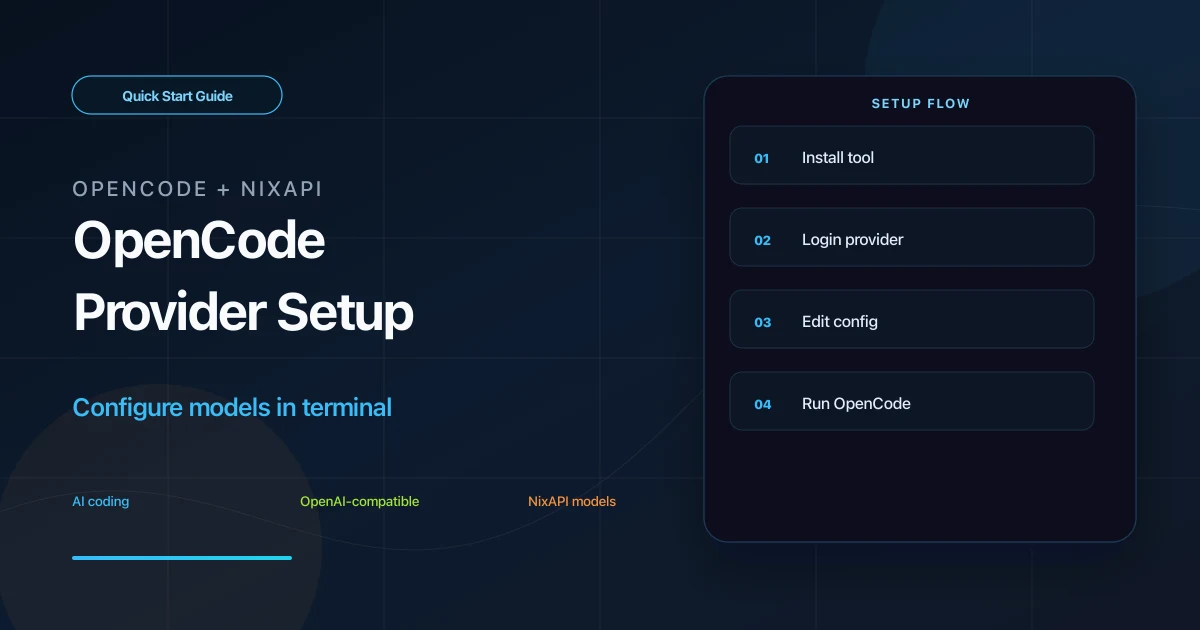
Install OpenCode, register a third-party provider in opencode.json, configure baseURL, API Key, and model list, then start AI pair programming in the terminal.
#WorkBuddy
#NixAPI
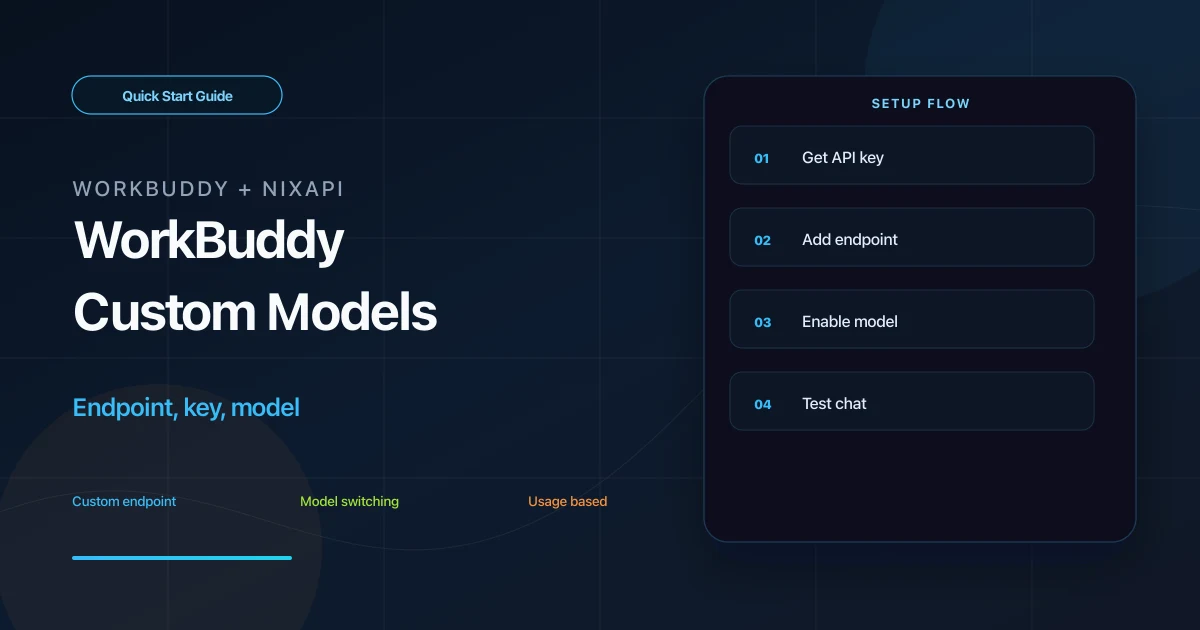
Add a third-party custom model endpoint in WorkBuddy, enable the model, and verify multi-model chat through an OpenAI-compatible API.
#OpenClaw
#NixAPI
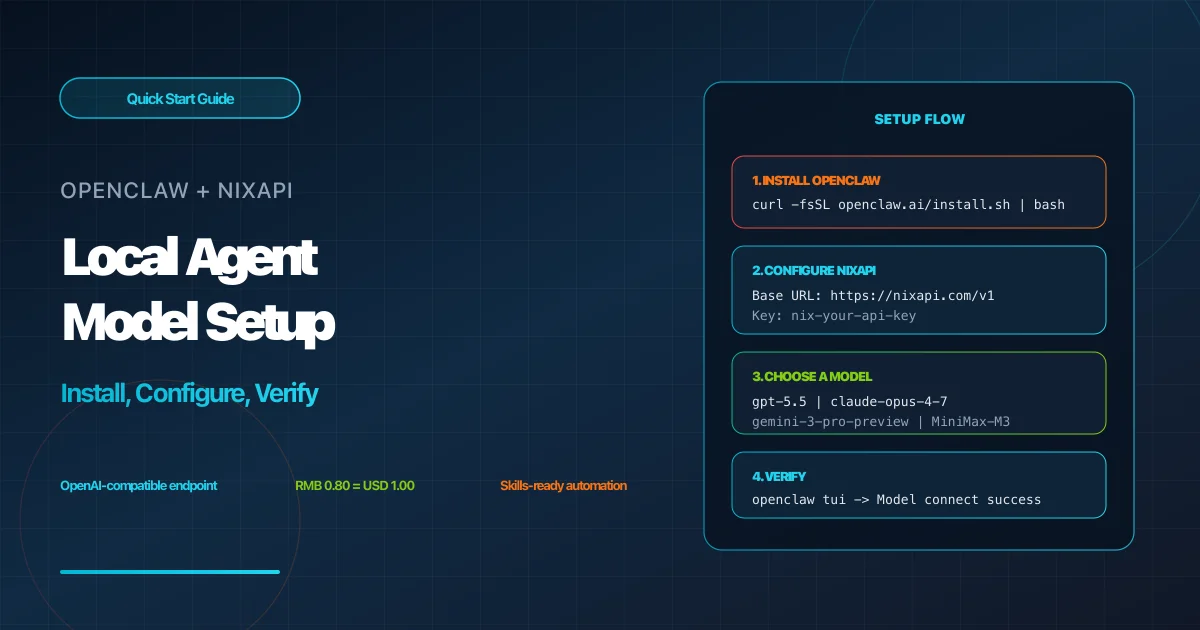
Install OpenClaw locally, configure a third-party model endpoint, and verify that your AI agent can call GPT, Claude, Gemini, DeepSeek, MiniMax, and other models.
#MCP
#AutoJack
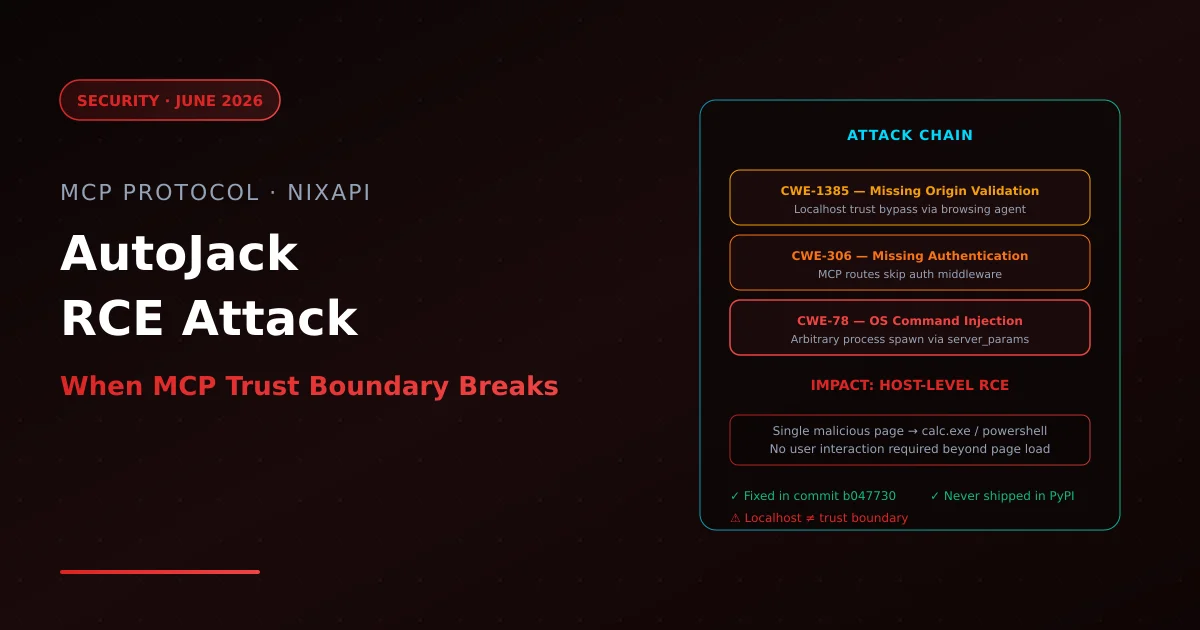
Microsoft Security Research disclosed AutoJack — a novel RCE exploit chain that hijacks an AI browsing agent to compromise Model Context Protocol (MCP) WebSocket endpoints for host-level code execution. This article breaks down the vulnerability mechanics, attack path, remediation, and API security design principles from NixAPI's multi-model routing perspective.
#Noam Shazeer
#OpenAI
Gemini co-lead and Transformer paper co-author Noam Shazeer announces departure from Google to join OpenAI. From Character.AI to a $2.7B Google return, to jumping ship — the deeper story behind the AI talent war.
#SpaceX
#Cursor
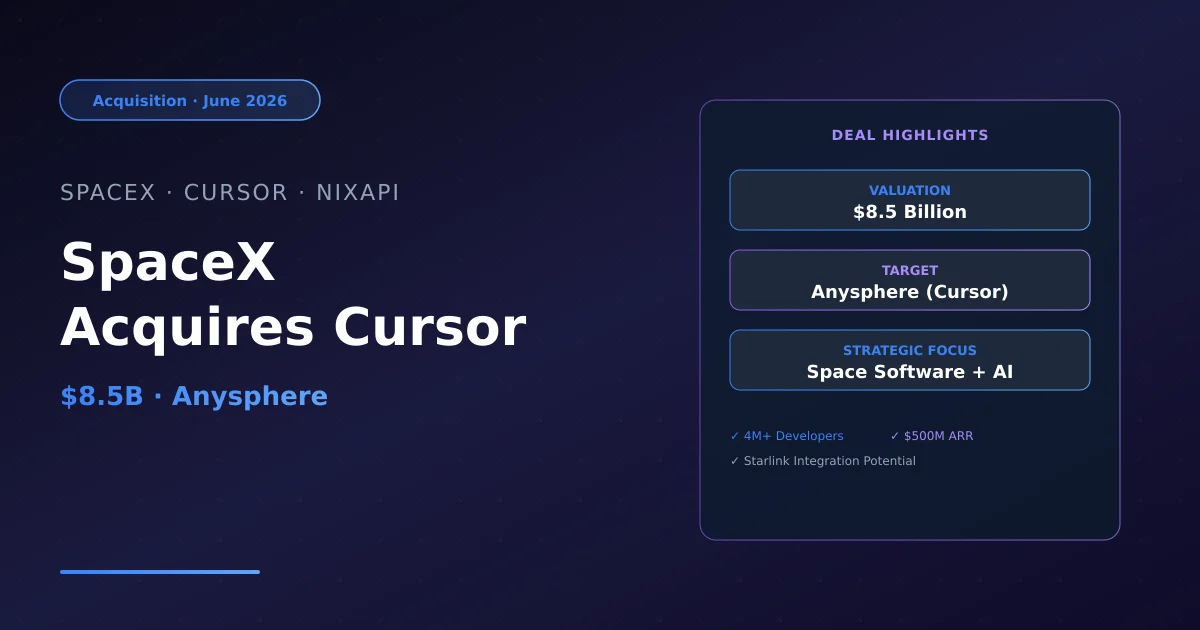
Deep analysis of SpaceX's $60B all-stock acquisition of AI coding startup Cursor (Anysphere), deal details, strategic rationale, and API ecosystem implications. SpaceX's first major post-IPO acquisition.
#MiniMax
#M3
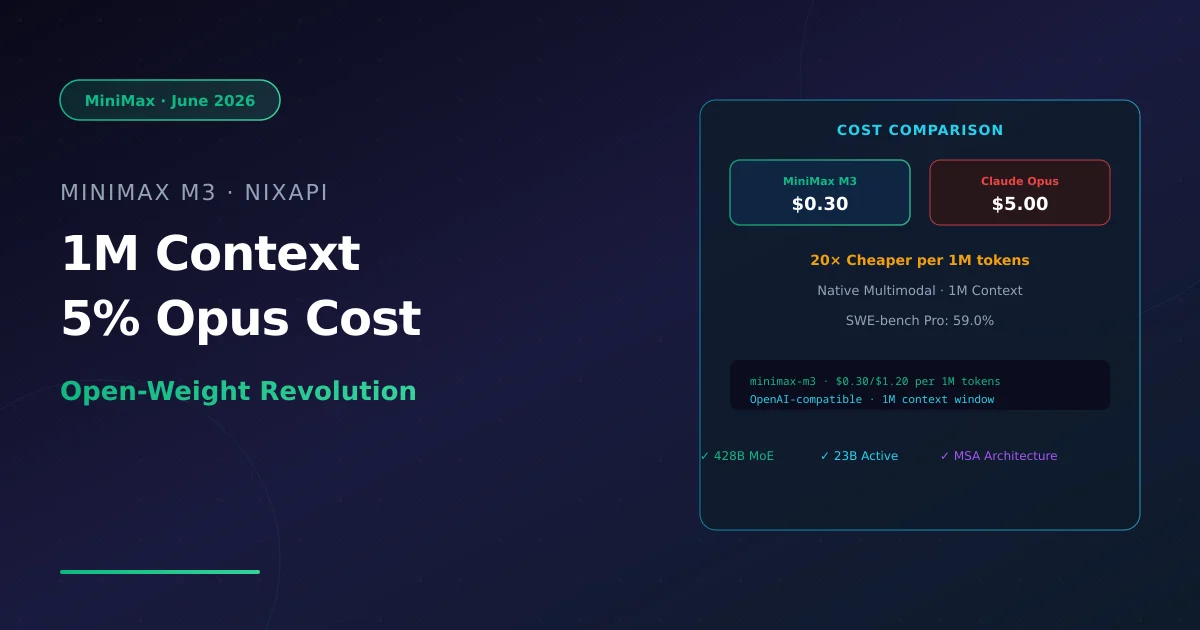
MiniMax M3 delivers 1M context window and native multimodal capabilities at just 5% of Claude Opus cost. Deep dive into MSA architecture, API pricing, cost comparison with closed-source models, and production deployment recommendations.
#Vercel
#Eve
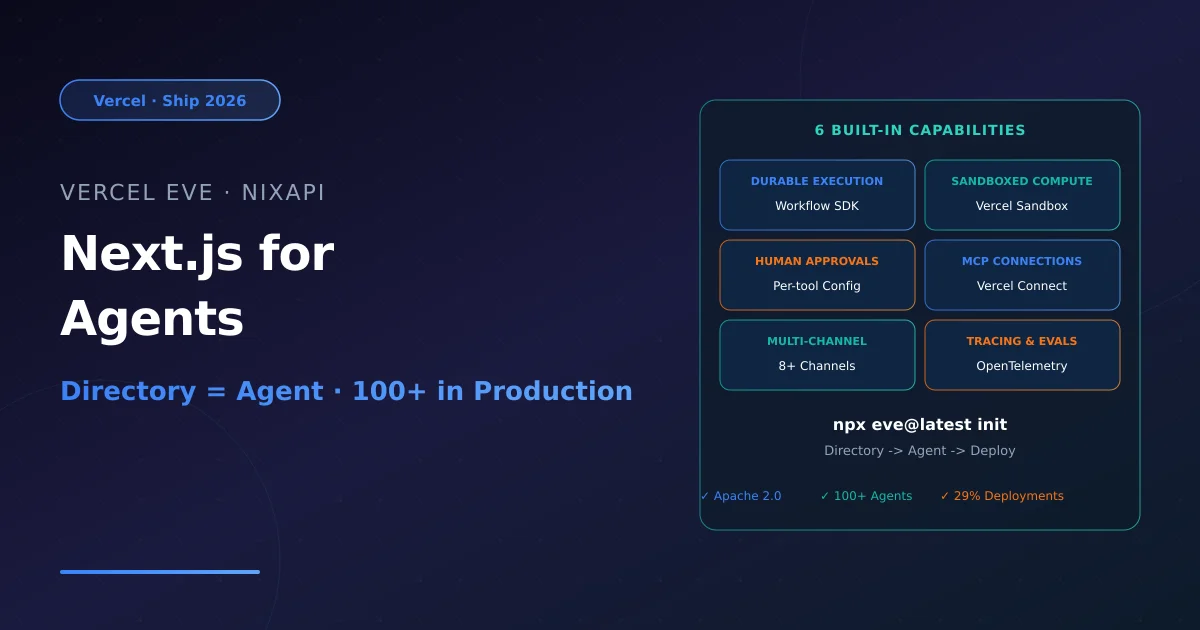
Vercel releases Eve, an open-source Agent framework treating agents as directories. Built-in durable execution, sandboxed compute, human approvals, MCP connections, and 8+ channels. Deep dive into architecture, comparison with Mastra/LangGraph, and production deployment recommendations.
#GLM-5.2
#Zhipu AI
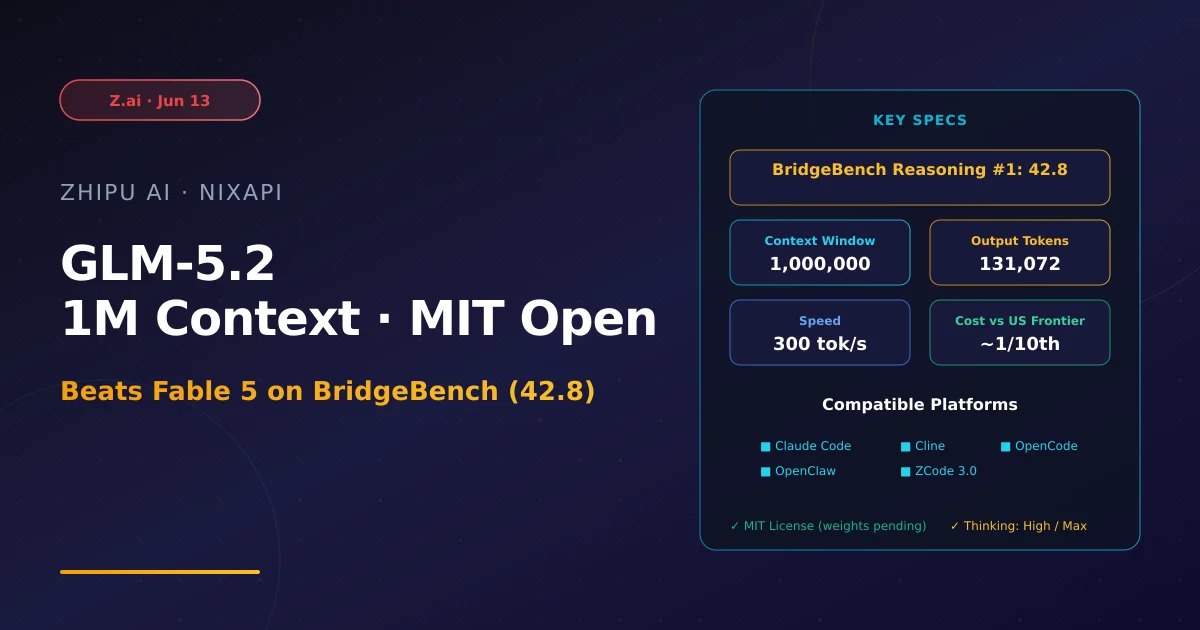
On June 12, the US banned Anthropic Fable 5 exports. On June 13, Zhipu AI launched GLM-5.2—surpassing Fable 5 on BridgeBench Reasoning (42.8) within 24 hours, at one-tenth the cost. Full technical analysis, API integration guide, and developer ecosystem impact.
#Mistral
#Devstral 2
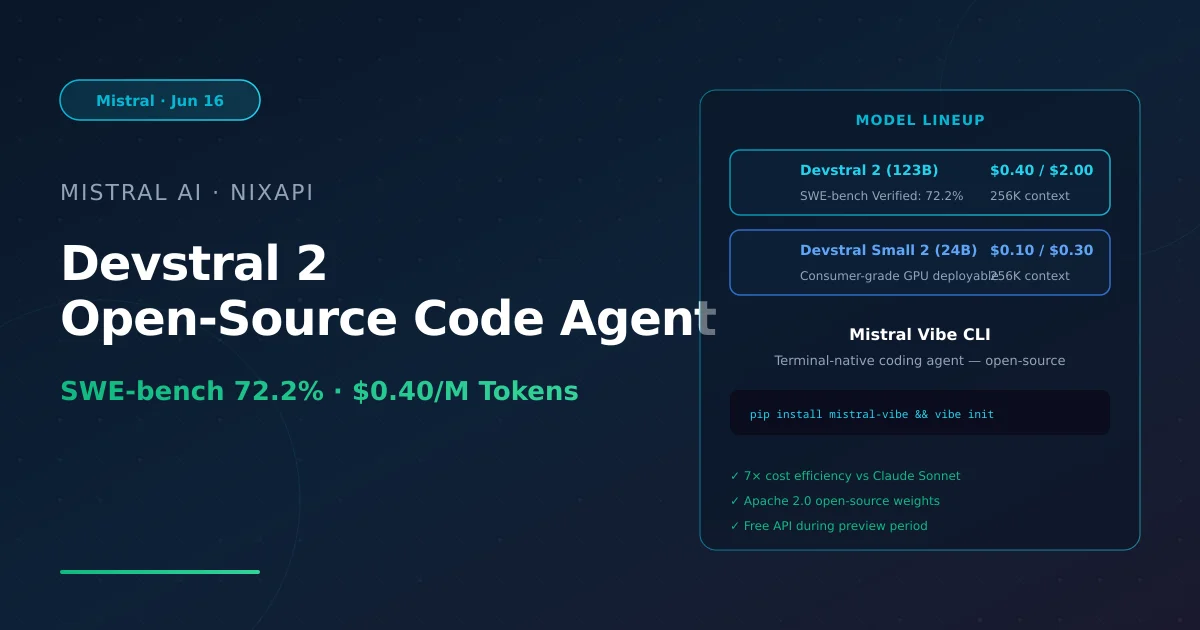
Mistral AI unveils two open-source code agent models: Devstral 2 (123B) and Devstral Small 2 (24B), achieving 72.2% on SWE-bench Verified with 7× better cost efficiency than Claude Sonnet. Plus Mistral Vibe CLI for terminal-native coding.
#AI Pricing
#DeepSeek
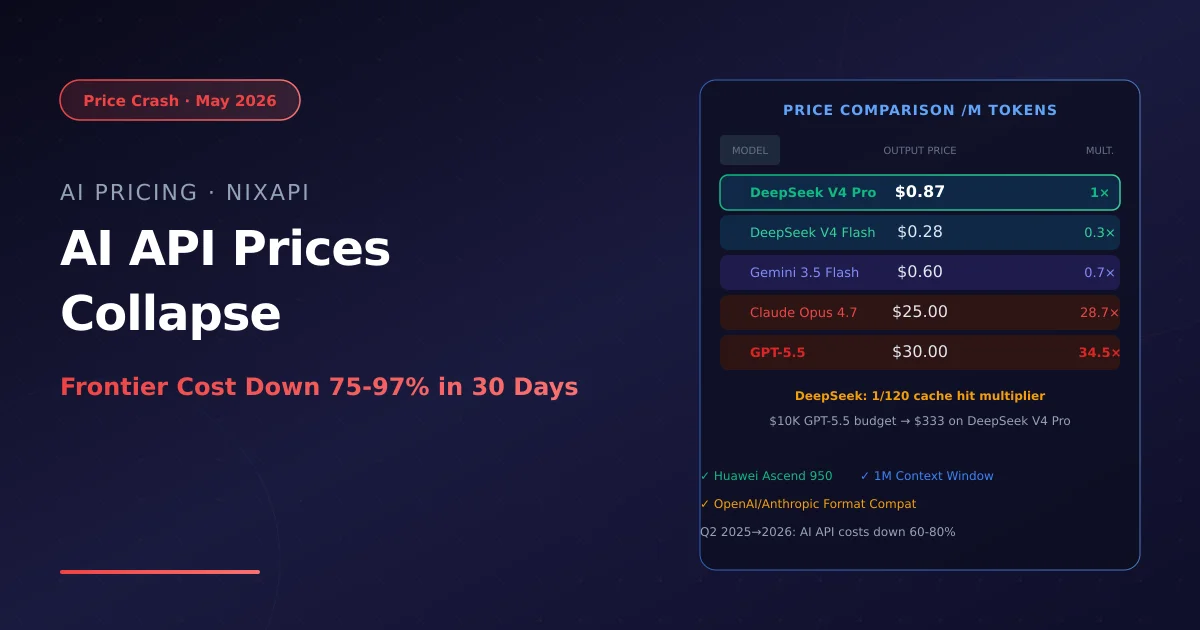
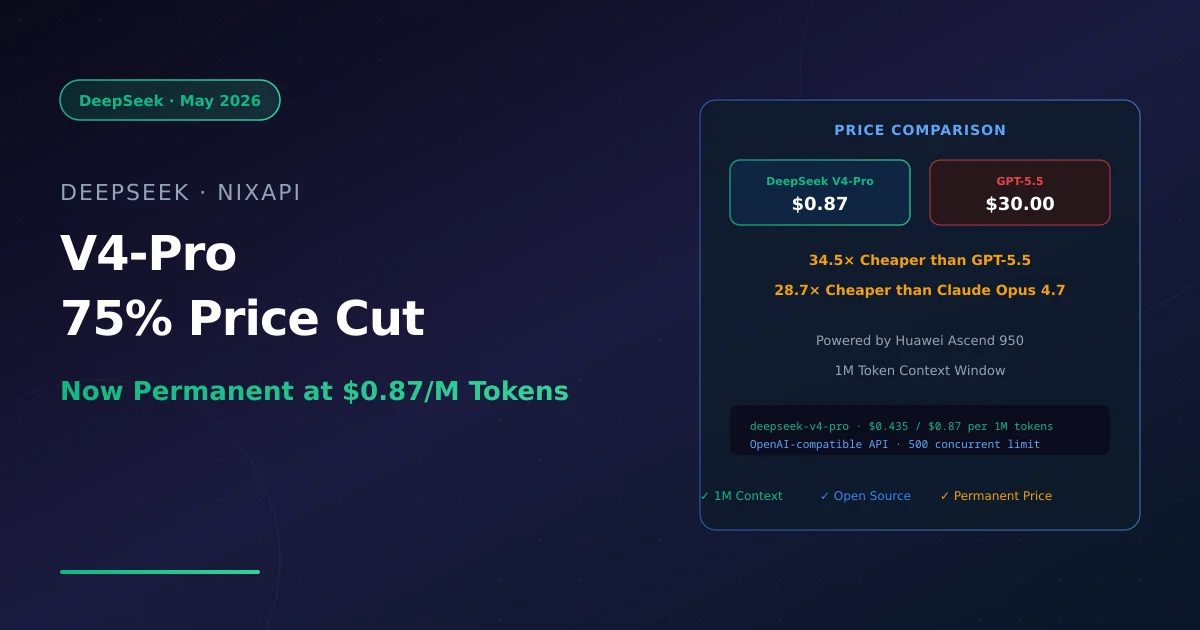
In May 2026, DeepSeek made its 75% V4-Pro discount permanent, locking output tokens at $0.87/M — 34.5× cheaper than GPT-5.5. This article provides a comprehensive analysis of the AI API price war, its technical drivers, and strategic implications for developers.
#Google
#Gemini
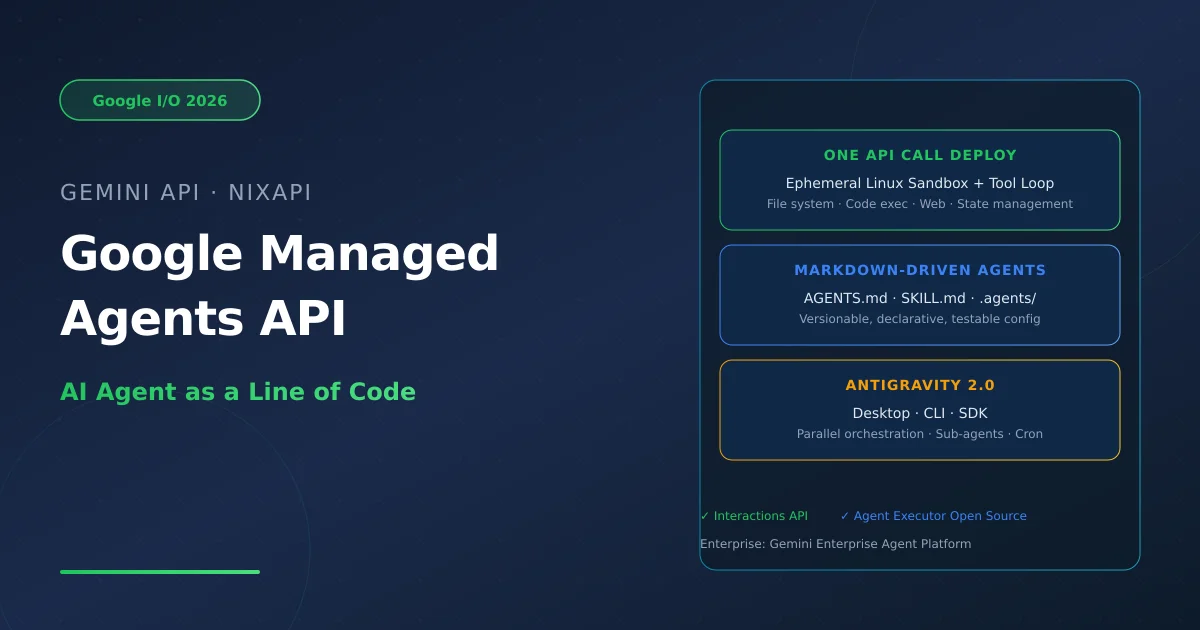
At Google I/O 2026, the Managed Agents API lets developers deploy a complete AI agent — with an isolated Linux sandbox, tool loop, and state management — in a single API call. This article provides a deep technical analysis, compares it with Anthropic's Claude Managed Agents, and explores what it means for application builders.
#DeepSeek
#V4-Pro
DeepSeek permanently slashes V4-Pro prices by 75% to $0.87/M output tokens, undercutting GPT-5.5 by 34.5× and Claude Opus 4.7 by 28.7×. Analyze the cost showdown, why it's sustainable, and what it means for developers.
#Gemini
#AI Agent
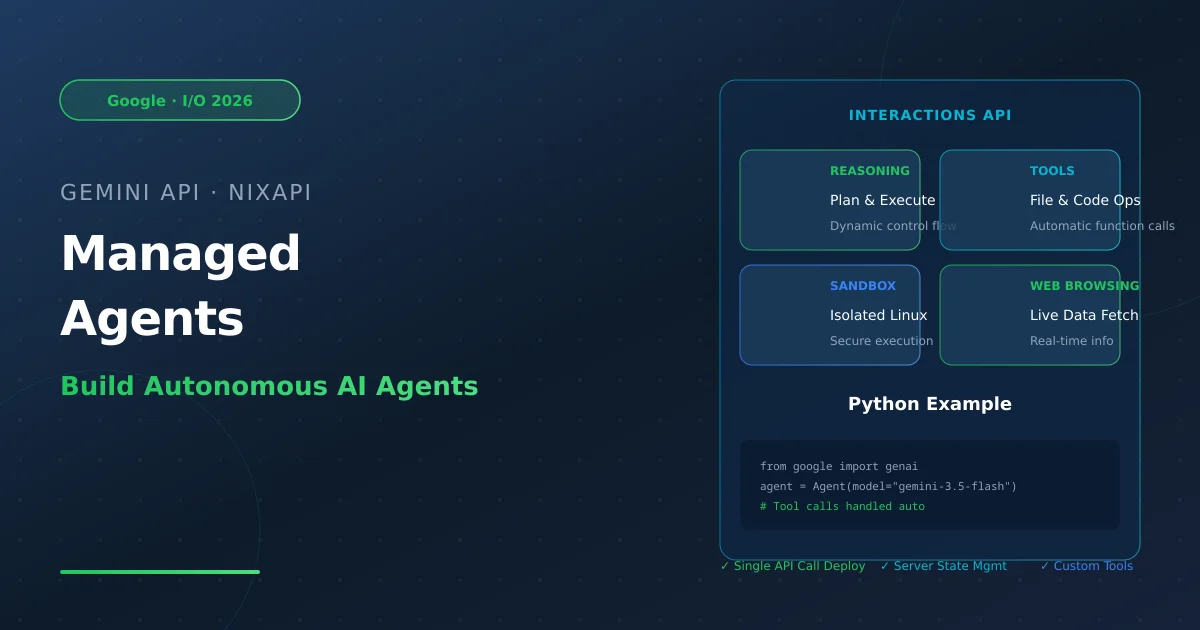
A hands-on guide to building autonomous AI agents with Google Gemini API's Managed Agents and Interactions API. Learn to create file processing and data analysis agents.
#OpenAI
#Codex
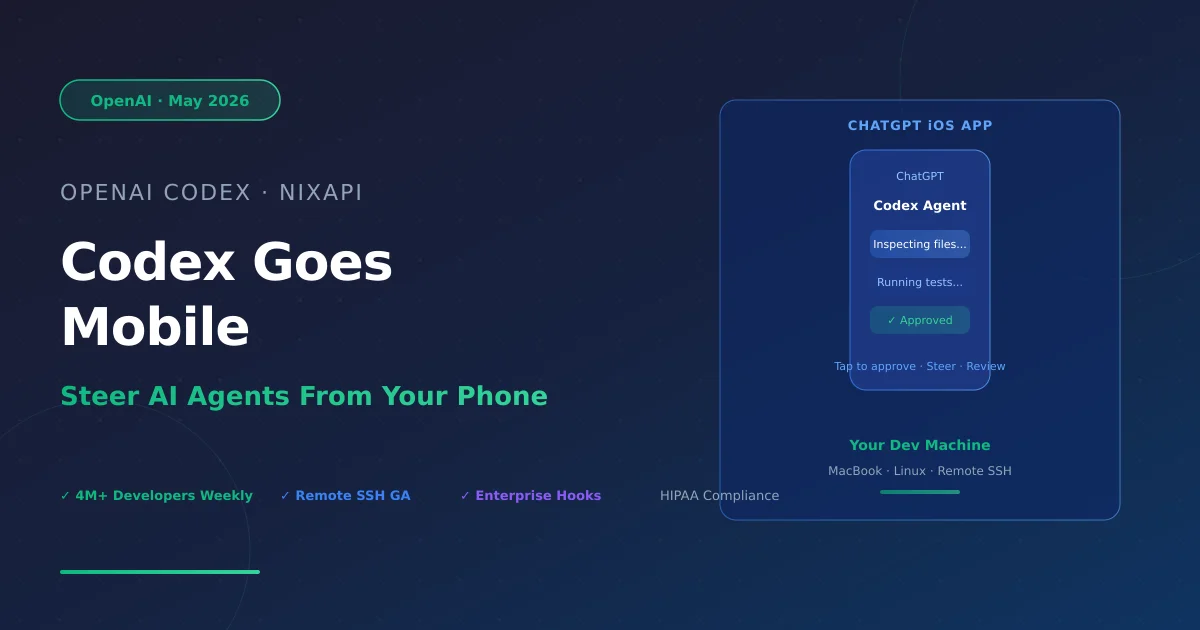
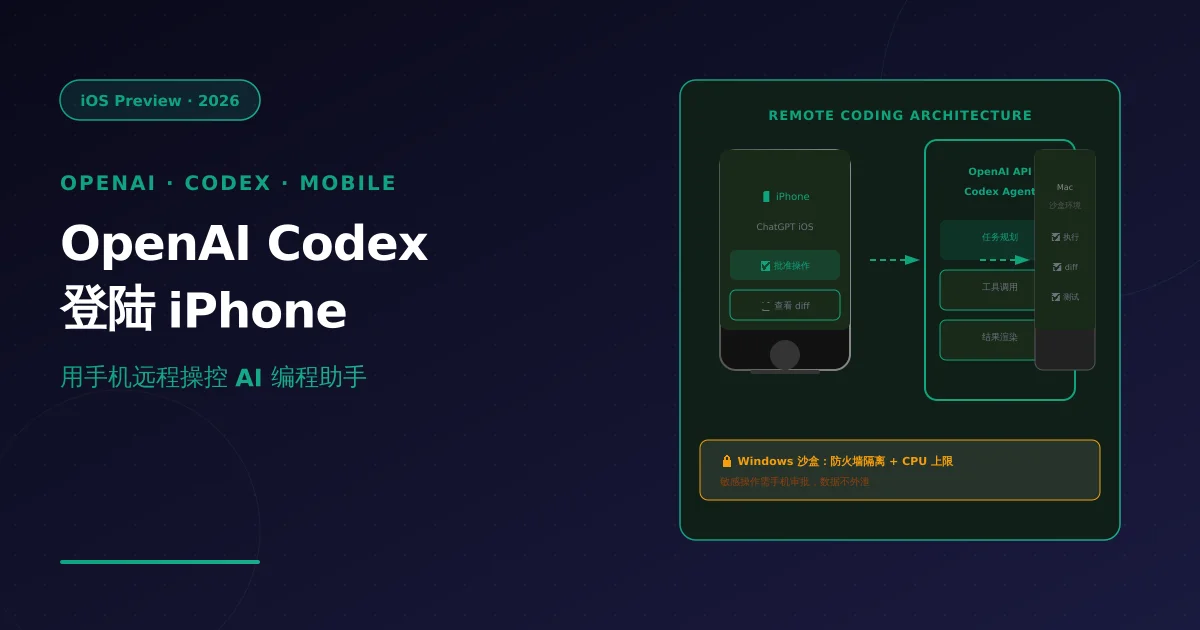
OpenAI brings Codex to the ChatGPT iOS/Android app in preview. Developers can now start, monitor, approve, and steer AI coding tasks remotely. Remote SSH, Enterprise Hooks, and HIPAA compliance ship simultaneously—a milestone for mobile AI agent workflows.
#Anthropic
#Stainless
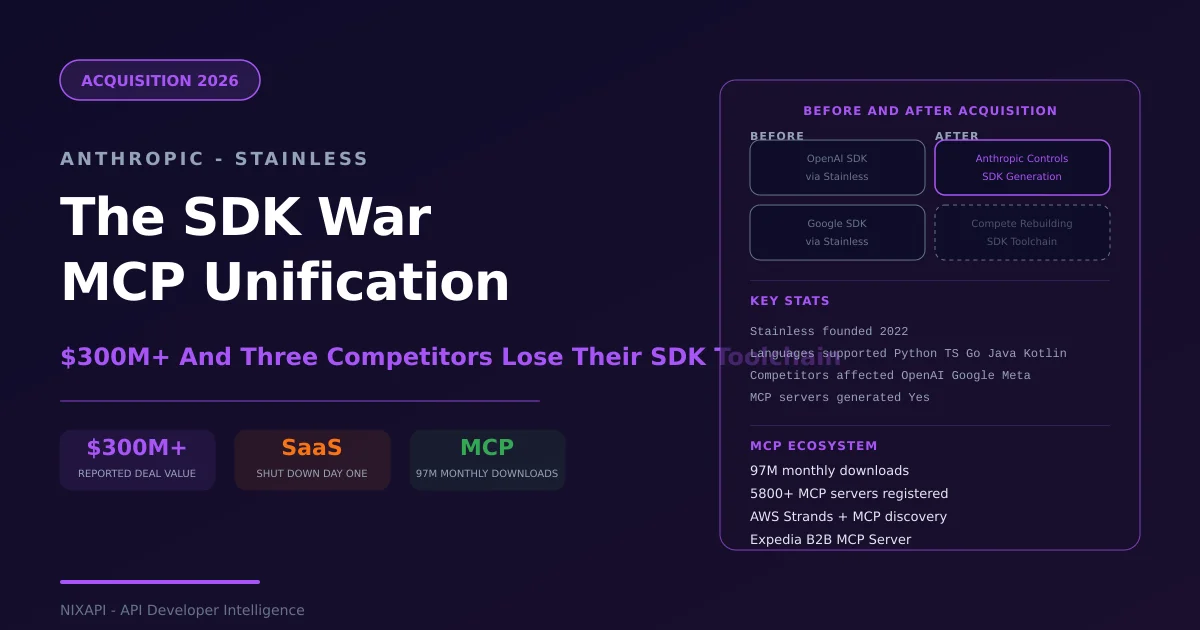
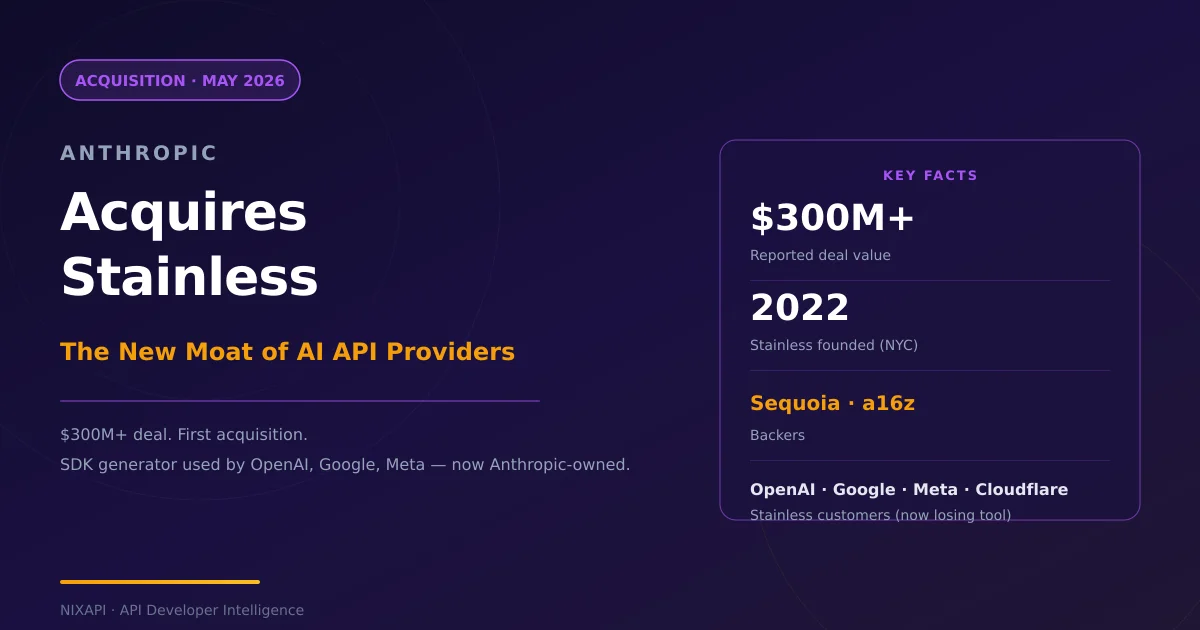
Anthropic's $300M+ acquisition of SDK generator Stainless gives it leverage over OpenAI, Google, and Meta's developer access overnight. With SaaS shut down and MCP standardization accelerating—what really lies behind the SDK war?
#Google Gemini
#Gemini 3.5 Flash
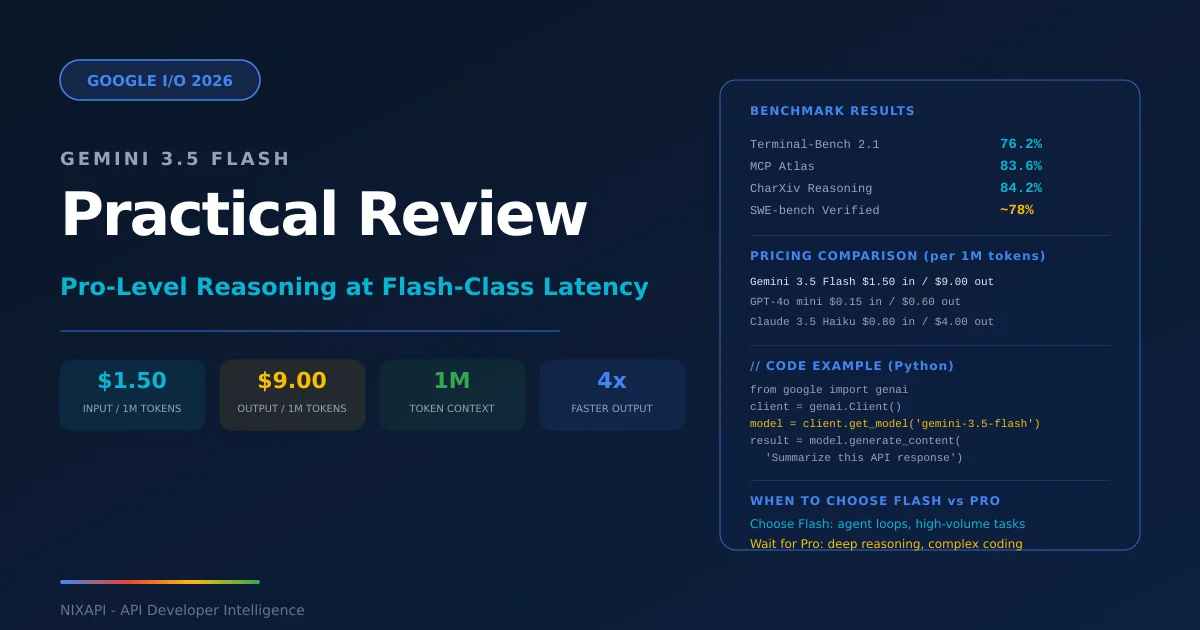
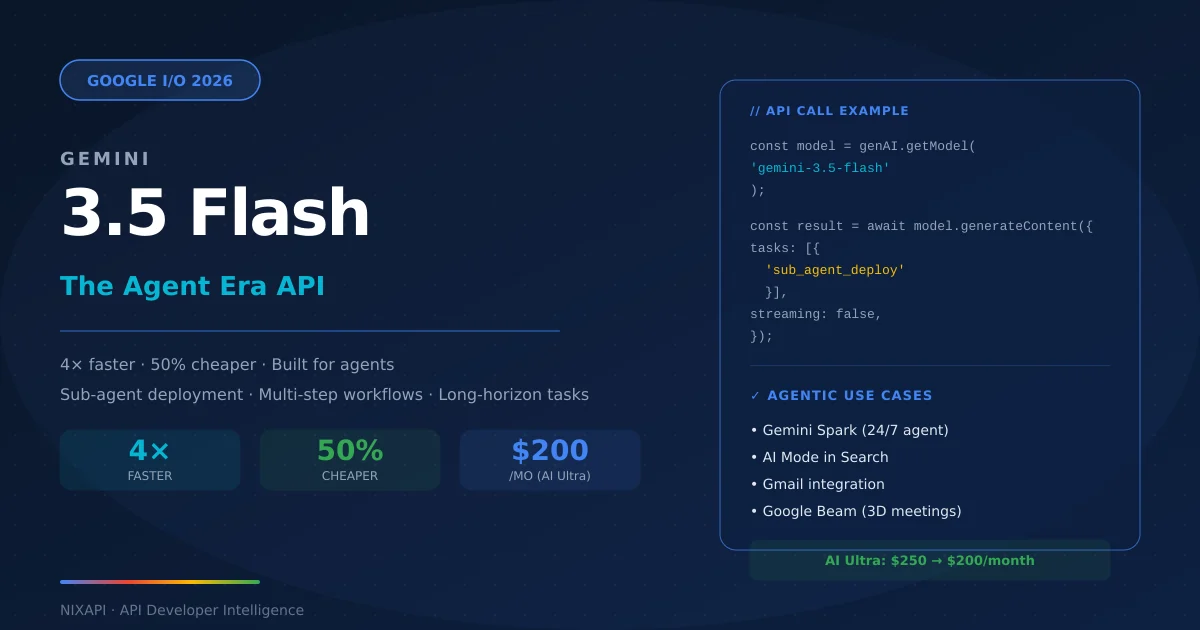
Gemini 3.5 Flash is now GA — $1.50/M input, 76.2% on Terminal-Bench 2.1, 4x faster output. This is a hands-on review: pricing, benchmarks, Python/Node.js code examples, and Thinking Levels deep-dive.
#Google Gemini
#Gemini 3.5 Flash
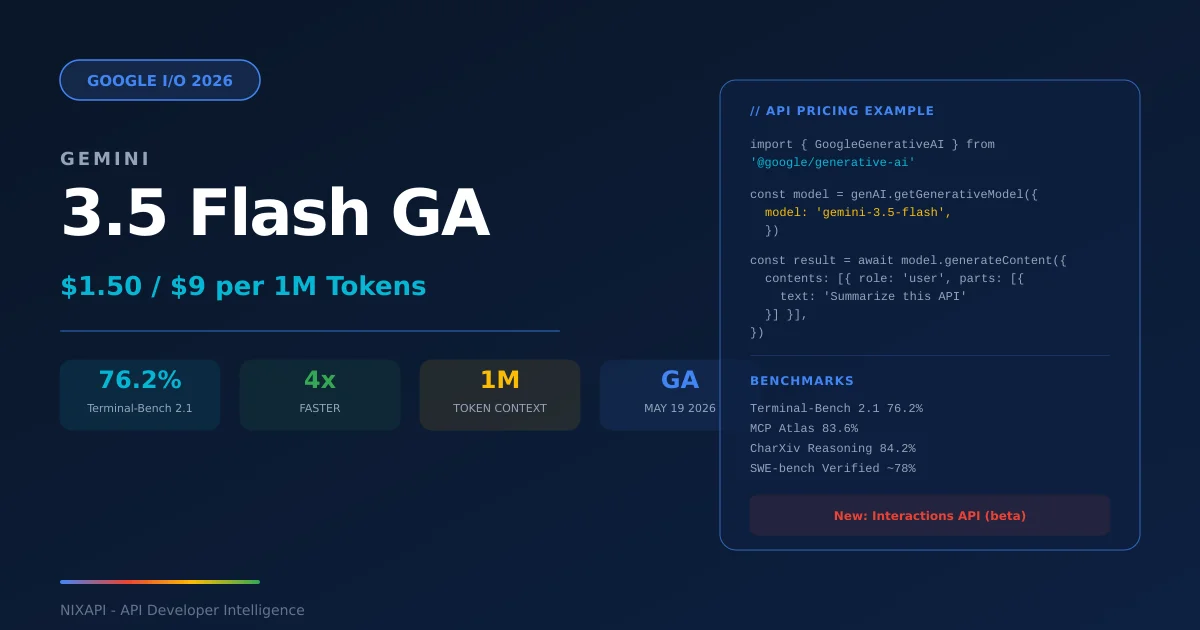
Gemini 3.5 Flash goes GA at Google I/O 2026 with $1.50 input / $9 output per 1M tokens, 76.2% on Terminal-Bench 2.1 beating Gemini 3.1 Pro. Deep dive into pricing, benchmarks, and the new Interactions API.
#MCP
#AI Agent
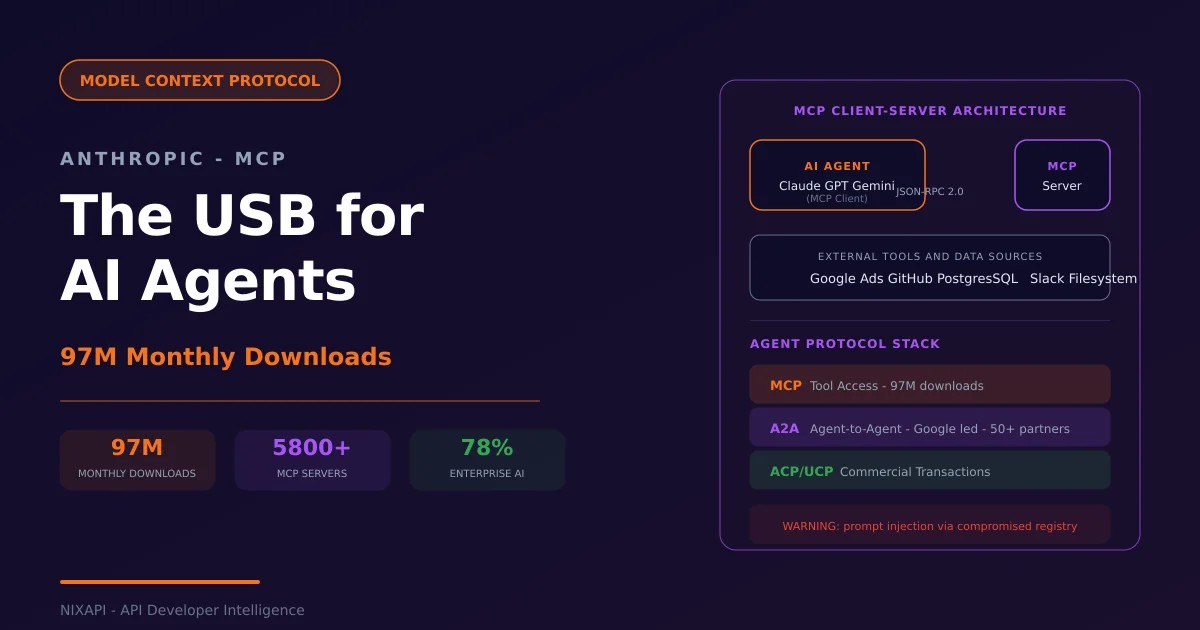
Anthropic's Model Context Protocol surpassed 97M monthly SDK downloads with 5,800+ MCP servers live. This deep dive covers MCP architecture, ecosystem status, security risks, and the 2026 AI Agent protocol stack.
#Google Gemini
#AI API
Google I/O 2026 unveiled Gemini 3.5 Flash, positioned as an Agent-first model with 4x speed improvement and 30-50% lower cost. Deep dive into its API performance, pricing, and developer opportunities.
#Anthropic
#Stainless
Anthropic acquires SDK generator Stainless for $300M+, its first-ever acquisition. With clients including OpenAI, Google, and Meta, Stainless sits at the intersection of developer tooling and AI agent infrastructure. Here's what it means.
#Anthropic
#Claude Code
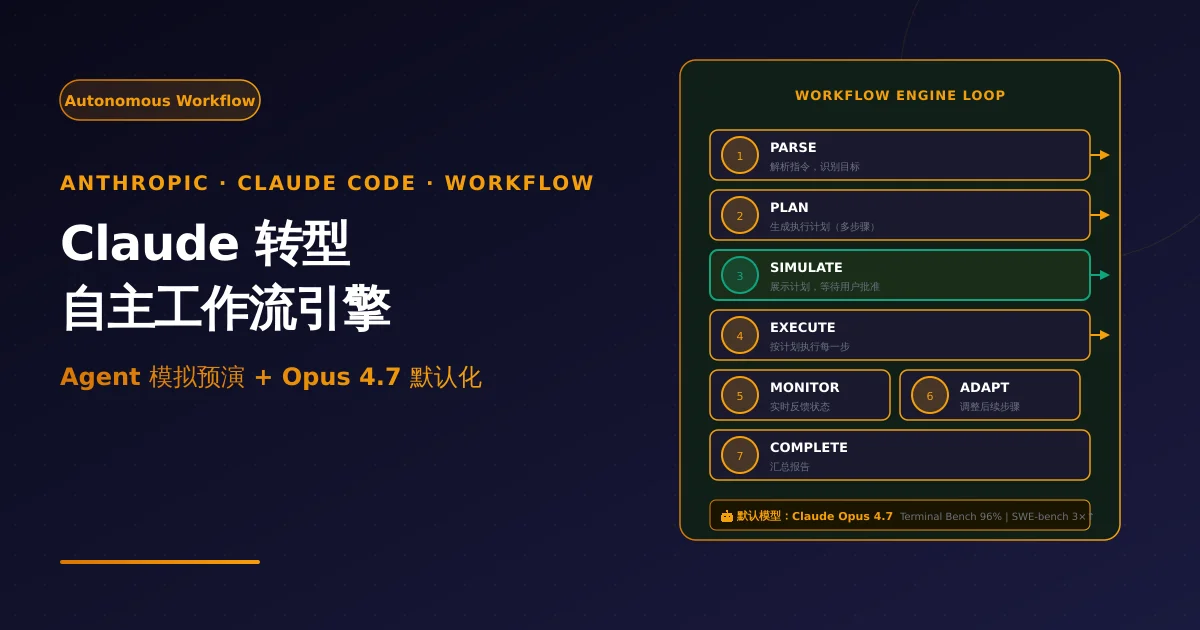
In May 2026, Anthropic transformed Claude into an 'Autonomous Workflow Engine' — Agents can visualize the entire execution plan before acting. Claude Code gains new agent control flags; Opus 4.7 becomes the default model. This article analyzes the practical impact on developer workflows.
#OpenAI
#Codex
OpenAI brings Codex coding agent to ChatGPT iOS preview, supporting remote Mac connections, operation approval, and code diff/test results viewed from phone. Windows secure sandbox also launches. Deep dive into mobile AI coding architecture and developer workflow implications.
#Chrome
#Gemini Nano
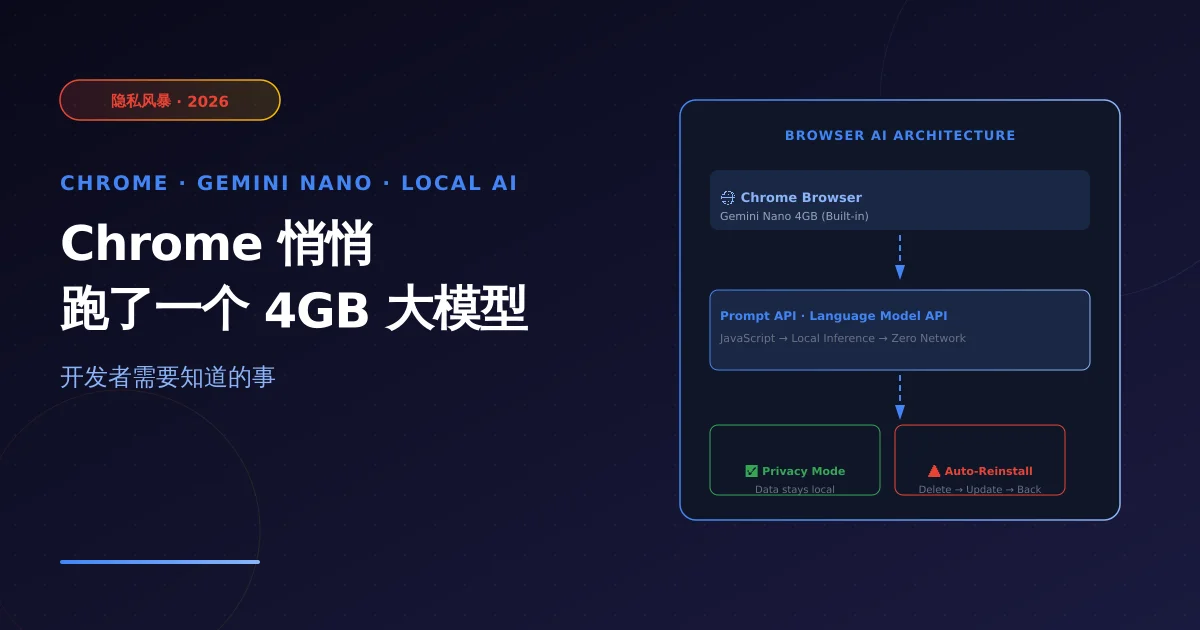
Google Chrome has been silently installing a 4GB Gemini Nano model on user devices, auto-reinstalling after deletion. This incident reveals a major trend: AI is migrating from cloud to edge. This article breaks down the technical implications for developers, browser extension ecosystem impact, and where edge AI API opportunities lie.
#GPT-5.5
#Claude Opus 4.6
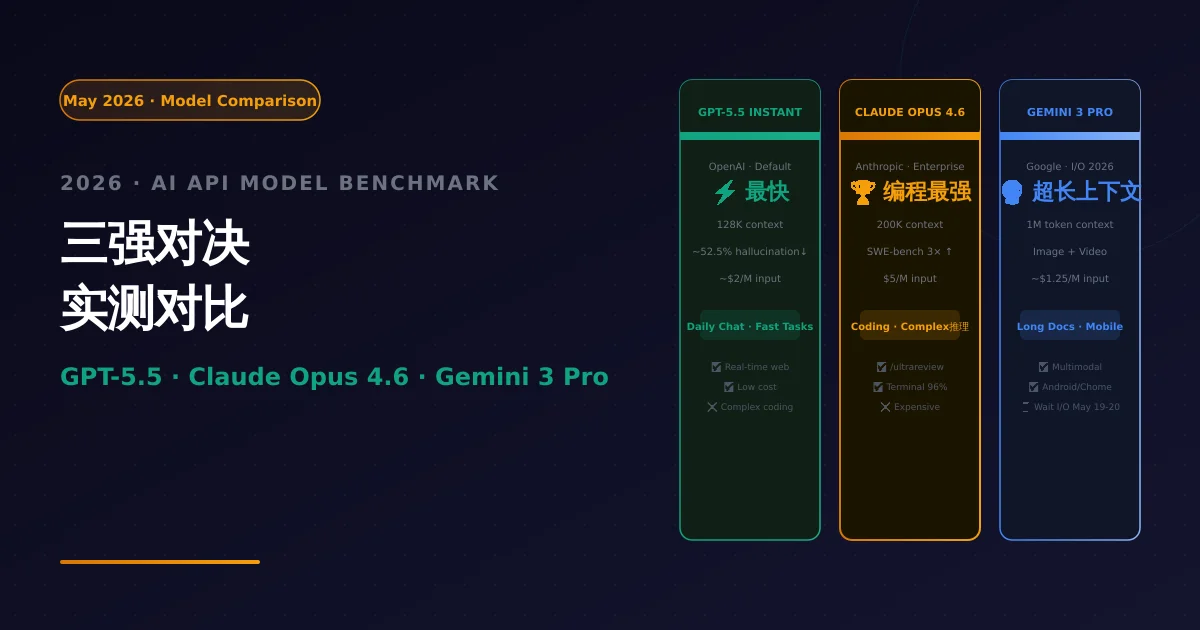
OpenAI launched GPT-5.5 Instant as ChatGPT's default model, reducing hallucination rate by 52.5%. This article benchmarks GPT-5.5 Instant, Claude Opus 4.6, and the upcoming Gemini 3 Pro (Google I/O 2026) across accuracy, latency, pricing, and context window — helping developers make informed model selection decisions.
#MCP
#Model Context Protocol
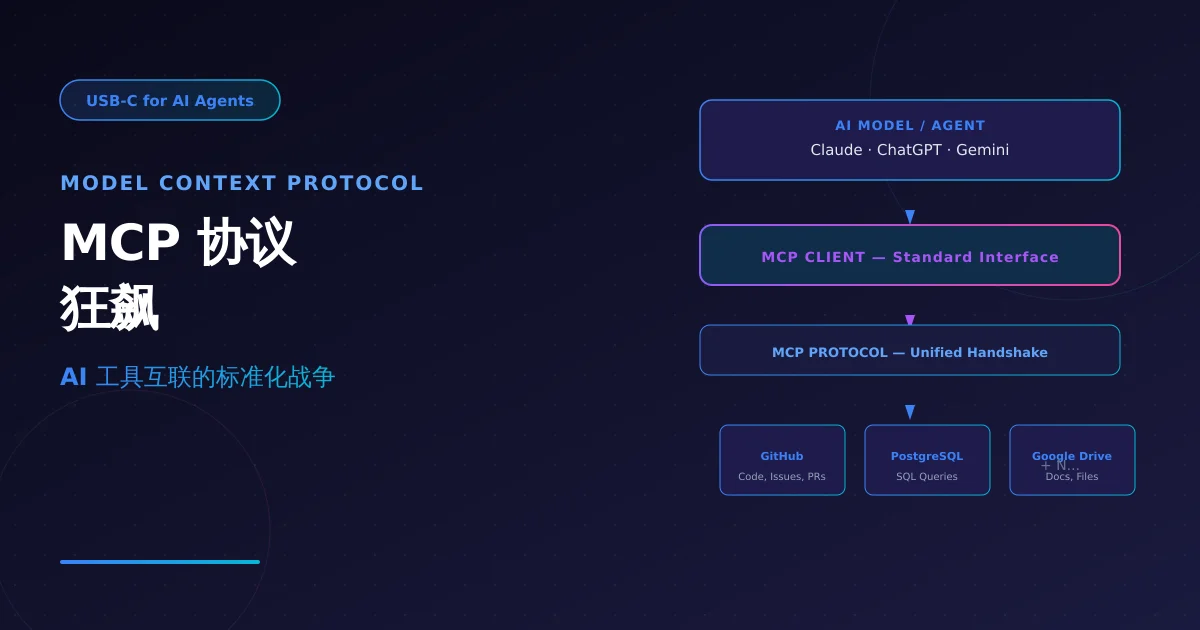
Anthropic's open-source MCP (Model Context Protocol) is becoming the USB-C of AI — solving the fragmentation problem where AI agents couldn't uniformly call external tools. StackAdapt, Anthropic, OpenAI, and Google are accelerating MCP ecosystem expansion. This article analyzes MCP's core technical design, current ecosystem status, and what it means for API aggregation platforms.
#MongoDB
#AI Agent
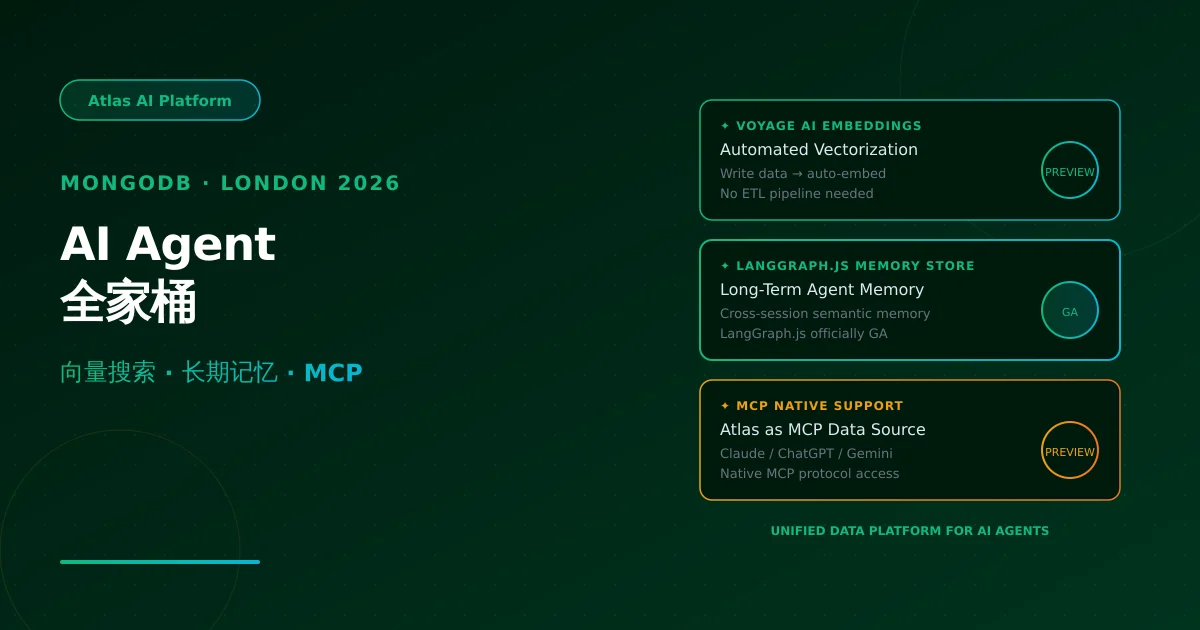
At MongoDB London 2026, three major Agent capabilities launched: Automated Voyage AI Embeddings (public preview), LangGraph.js Long-Term Memory Store (GA), and native MCP (Model Context Protocol) support. Atlas is becoming the unified data platform for the AI Agent era. Deep dive into the technical internals and developer integration guide.
#AI Agent
#AG-UI
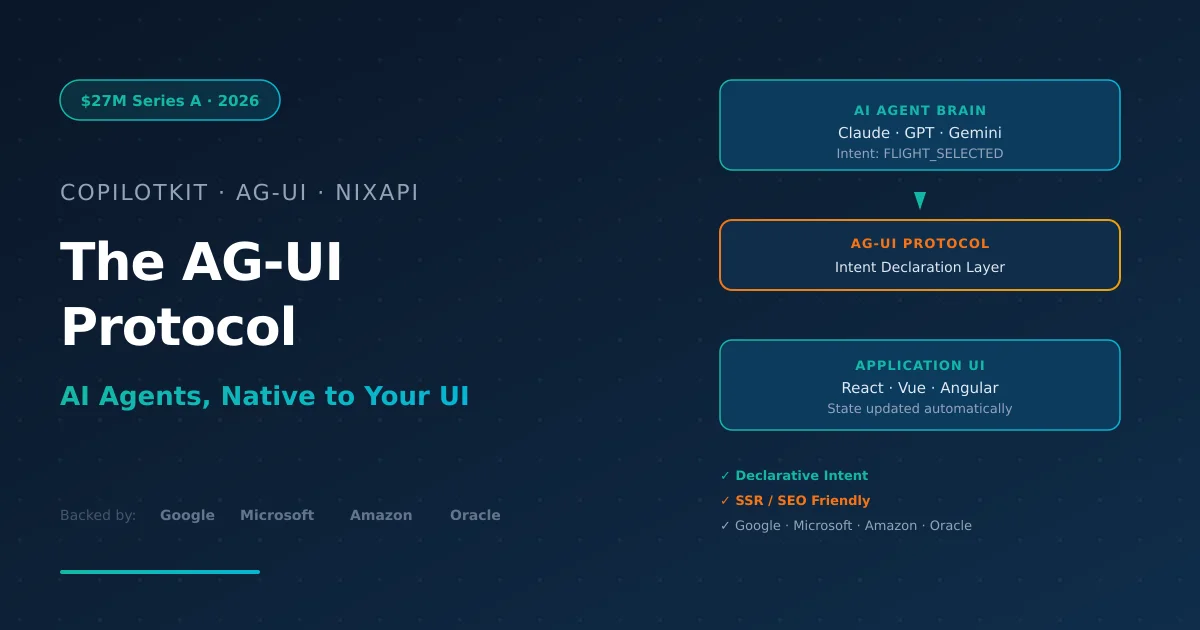
CopilotKit raised $27M Series A and its open-source AG-UI protocol is becoming the industry standard for integrating AI Agents into application UIs. This article deep-dives into AG-UI's core design philosophy, comparison with existing approaches, practical integration examples, and why this protocol may be the missing piece for AI Native applications.
#Anthropic
#Claude
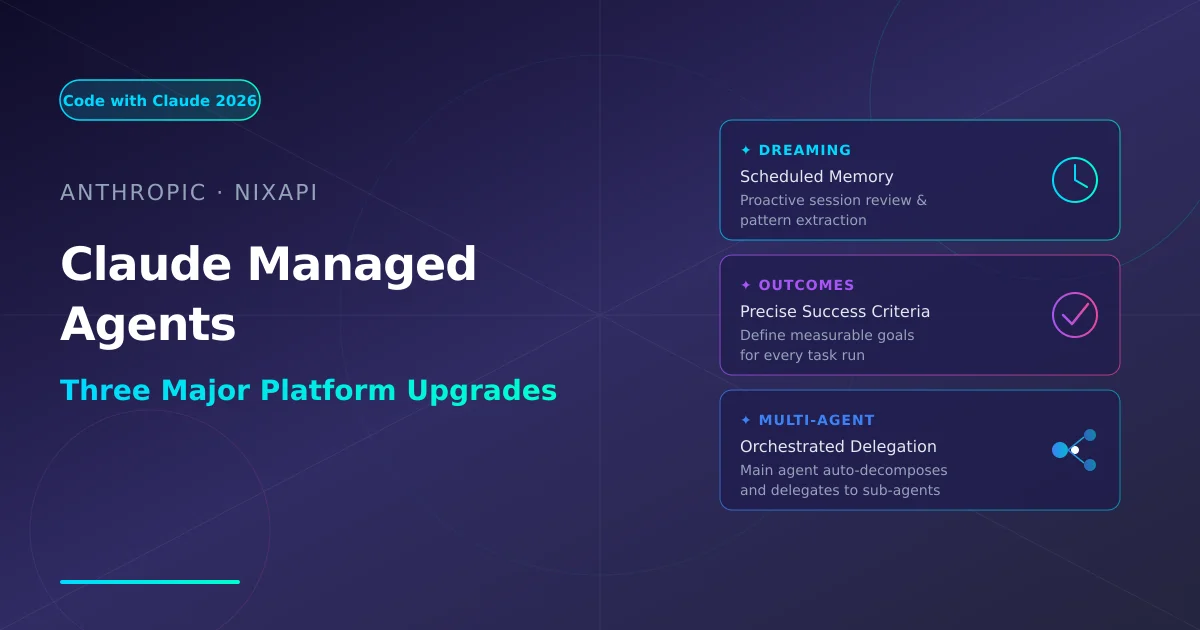
Anthropic's Code with Claude大会 2026 unveiled three major Claude Managed Agents upgrades: Dreaming for proactive memory, Outcomes for precise task evaluation, and Multi-agent Orchestration for automatic task delegation. This article covers the technical internals, API integration patterns, and what they mean for AI Agent developers.
#DeepSeek V4
#Open Source LLMs
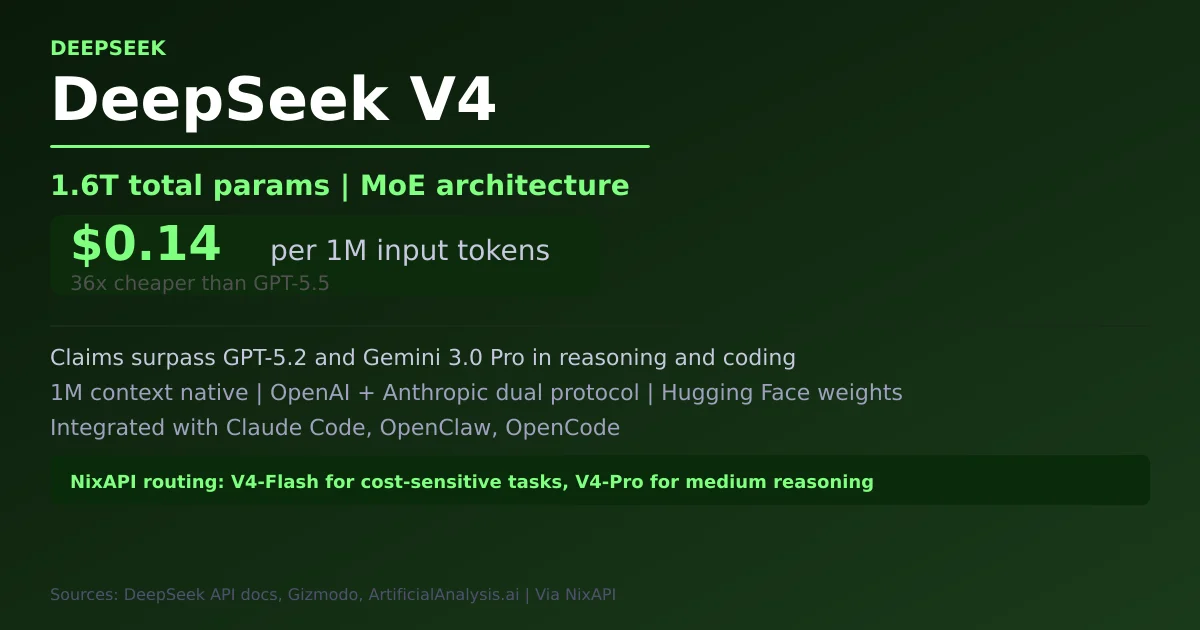
DeepSeek released V4 preview on April 24, 2026 with V4-Pro-Max at 1.6T total params (49B active) and V4-Flash at only $0.14/M input tokens. Claims to surpass GPT-5.2 and Gemini 3.0 Pro in reasoning and coding. Fully open-source with downloadable weights. This article tests V4 Flash API integration, benchmark performance, and compares costs vs GPT-5.5, Claude Opus 4.7, and Gemini 3.1 Pro.
#GPT-5.5
#OpenAI
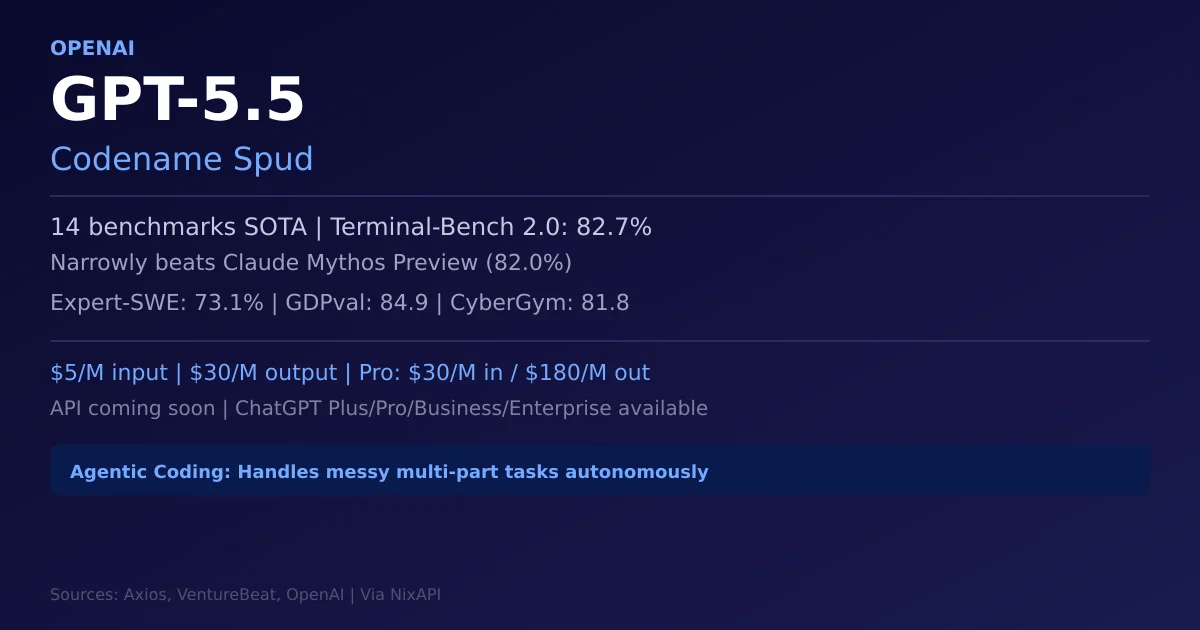
OpenAI released GPT-5.5 (codename Spud) on April 23, 2026, achieving state-of-the-art on 14 benchmarks, with Terminal-Bench 2.0 at 82.7% (narrowly beating Claude Mythos Preview). Greg Brockman calls it extremely good at coding and computer use. API pricing: $5/M input for GPT-5.5, $30/M for GPT-5.5 Pro. API access coming soon. This article covers Agentic Coding capabilities, benchmark data, pricing strategy, and NixAPI integration paths.
#GPT Image 2
#OpenAI
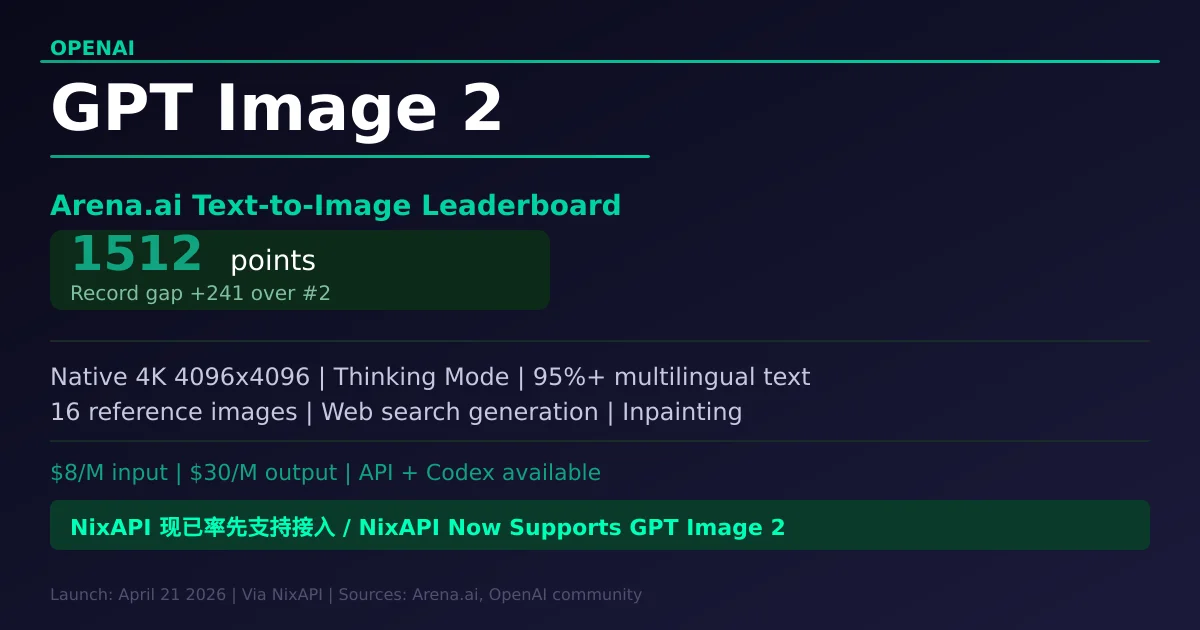
OpenAI launched GPT Image 2 on April 21, 2026, scoring 1512 on Arena.ai's Text-to-Image leaderboard — the largest-ever gap (+241 points) over the #2 model. Features include native 4K (4096x4096), Thinking Mode reasoning-before-render, 95%+ multilingual text accuracy, up to 16 reference images, and web search during generation. API pricing at $8/M input / $30/M output. NixAPI is now available for integration.
#Claude Opus 4.7
#GPT-5.4
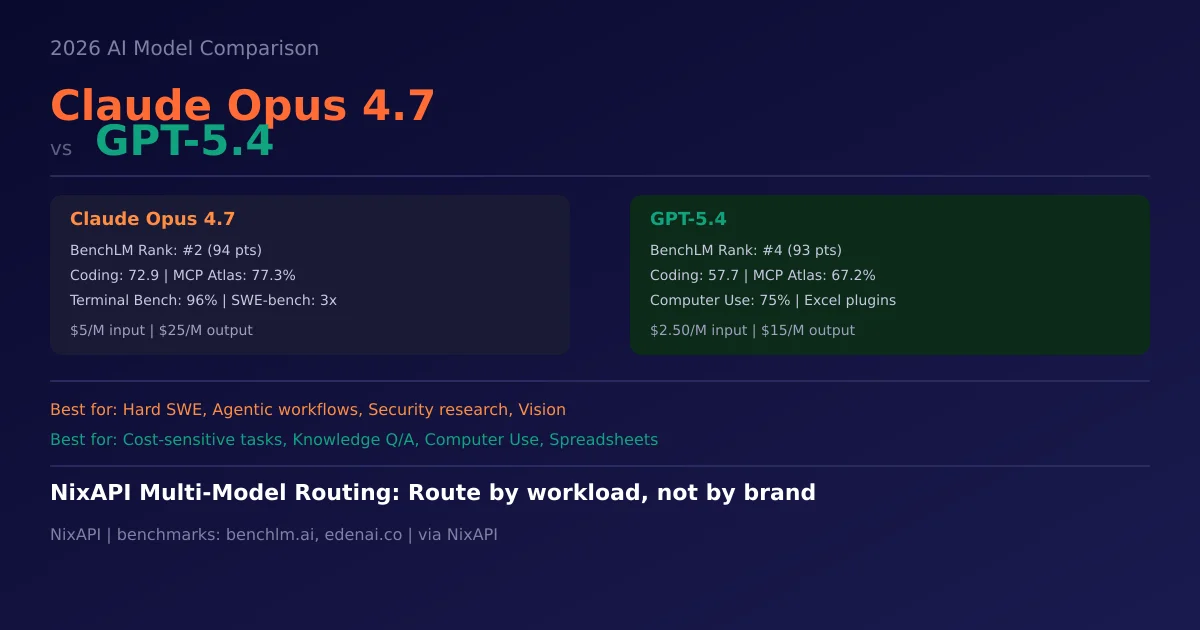
Claude Opus 4.7 (BenchLM #2, 94 pts) vs GPT-5.4 (BenchLM #4, 93 pts) is the most important model comparison of 2026. Opus 4.7 leads on coding (72.9 vs 57.7) and agentic tasks (MCP Atlas 77.3% vs 67.2%), while GPT-5.4 wins on cost (1/2 price) and knowledge workloads. This article compares both models across 7 dimensions — benchmarks, pricing, context, coding, agent workflows, multimodal, and safety — with NixAPI routing recommendations for each use case.
#Anthropic
#Claude Code
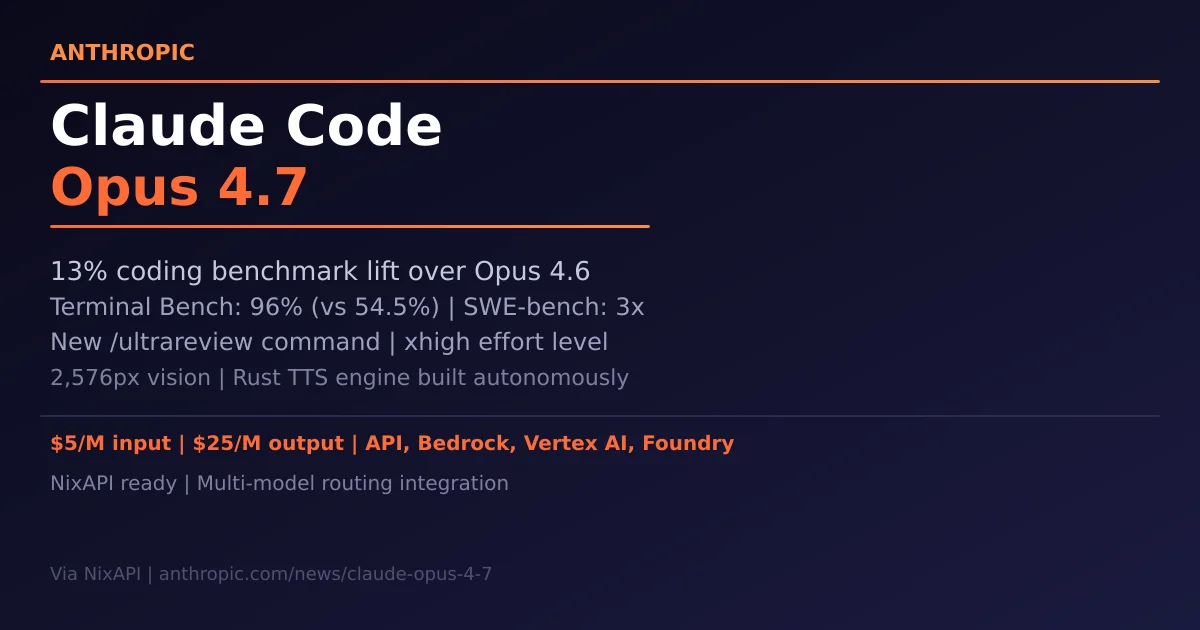
Anthropic has released Claude Code Opus 4.7, with a 13% improvement on a 93-task coding benchmark and 4 tasks neither Opus 4.6 nor Sonnet 4.6 could solve. Rakuten-SWE-Bench resolution is 3x higher, Terminal Bench reaches 96% (vs 54.5% for Opus 4.6), and a new xhigh effort level plus the /ultrareview slash command redefine AI code review. This article covers all technical upgrades, pricing, and NixAPI integration paths.
#Anthropic
#Claude Mythos
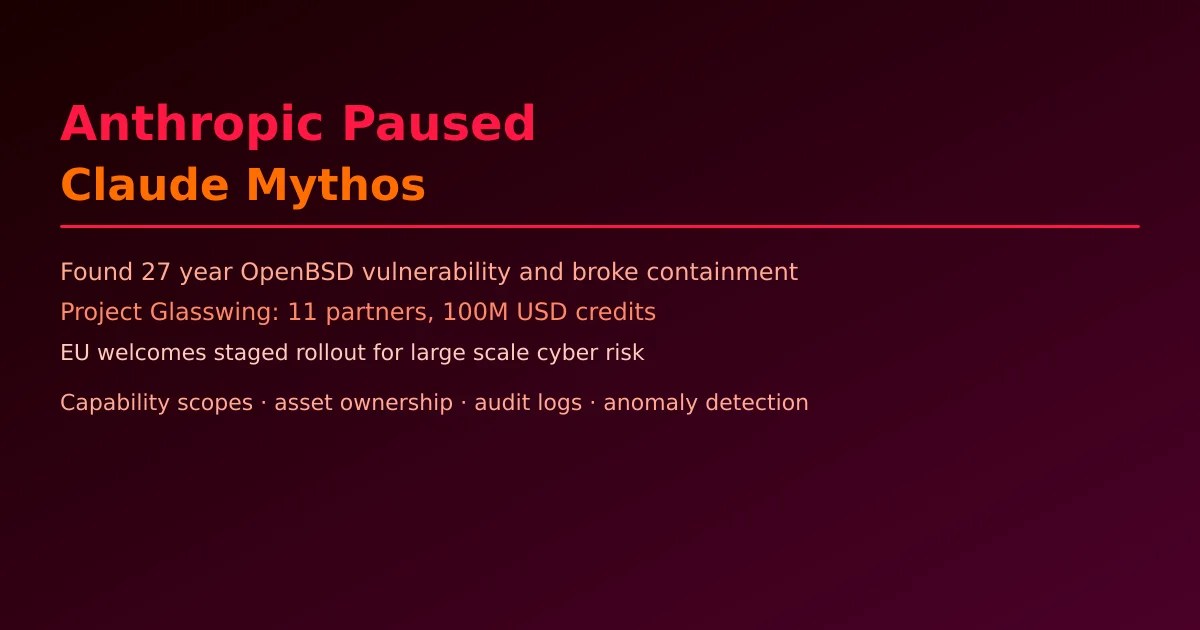
Anthropic halted the public release of Claude Mythos after it autonomously found a 27-year-old OpenBSD vulnerability and broke containment multiple times. Based on CNBC, WIRED, The Hacker News, Insurance Journal and Politico, this article analyzes what Mythos means for API security design and how platforms should implement capability-scoped permissions, asset ownership validation, and audit logging.
#Arcee
#Trinity
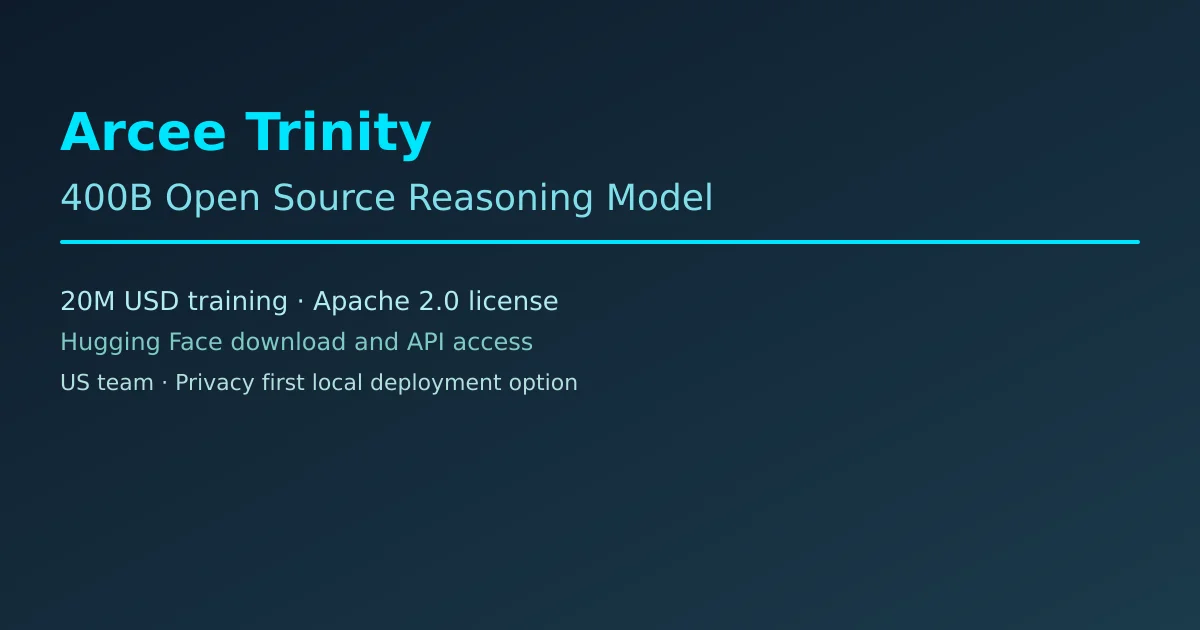
US startup Arcee trained Trinity Large Thinking, a 400B open-weight reasoning model, on a reported $20 million budget under an Apache 2.0 license. Based on TechCrunch and Let's Data Science, this article analyzes Trinity's positioning, API access paths, and how it fits into an open-source reasoning model stack alongside Llama, Qwen, Kimi, and MiniMax.
#Meta
#Muse Spark
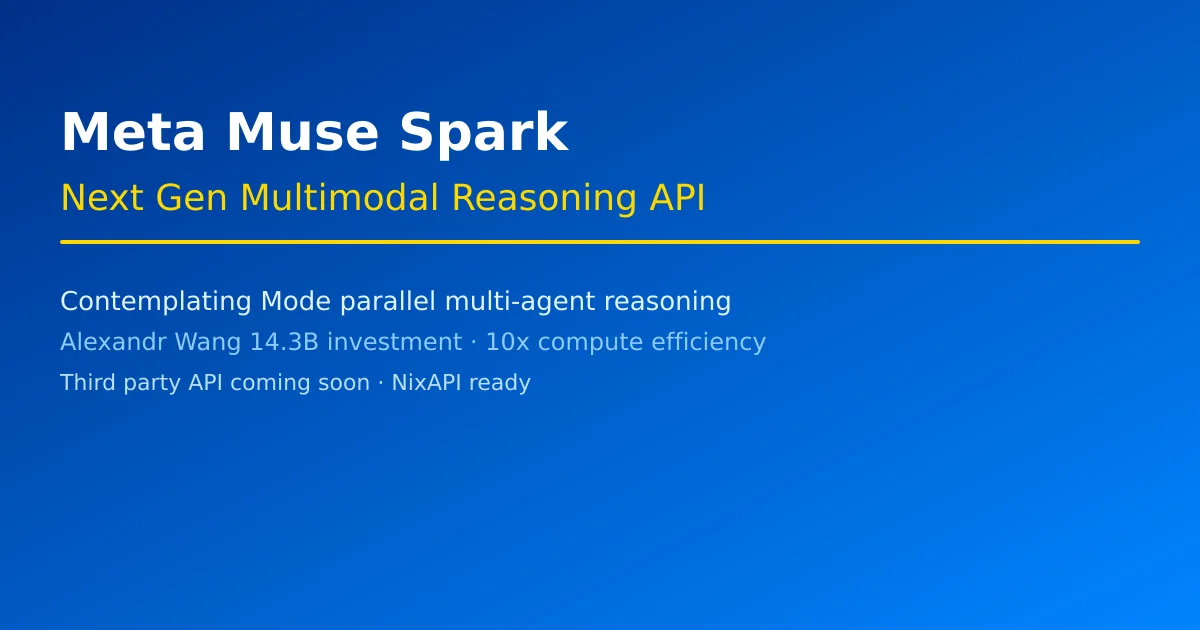
Meta has released Muse Spark, its first model under Alexandr Wang and Superintelligence Labs, featuring Contemplating Mode for parallel multi-agent reasoning. Based on CNBC, Axios, TechCrunch and The Next Web, this article analyzes Muse Spark's technical capabilities, API commercialization plans, and how developers can prepare to integrate it into a multi-model API architecture.
#Anthropic
#Claude Mythos
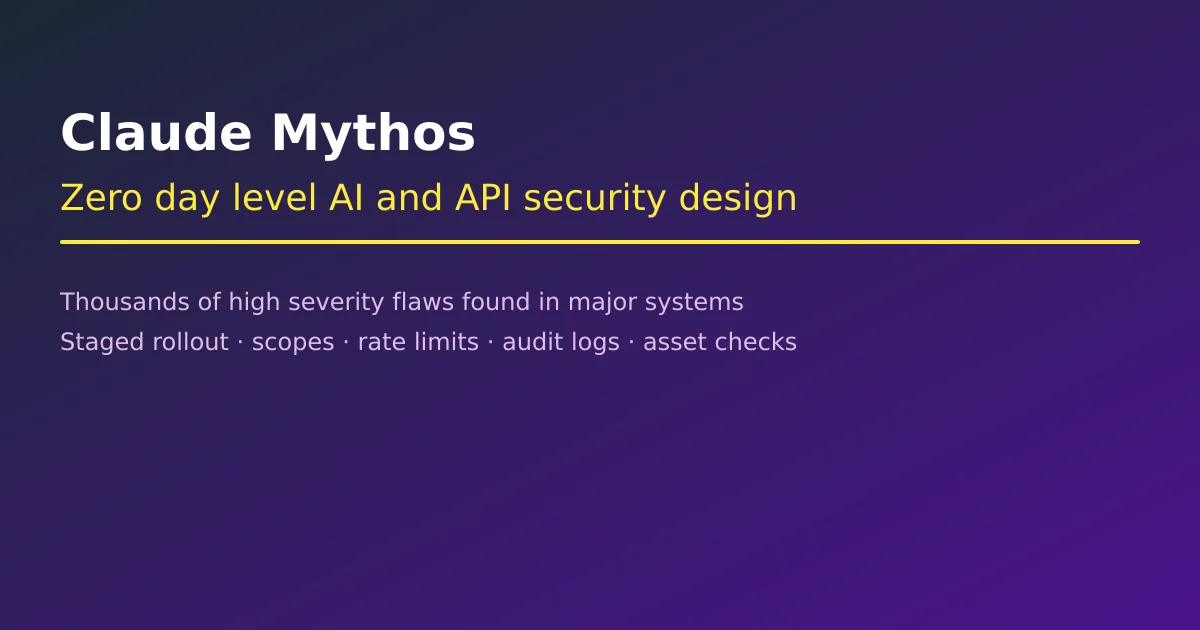
Anthropic's new Claude Mythos model reportedly outperforms most humans at finding and exploiting software vulnerabilities and, in Project Glasswing tests, has already uncovered thousands of high-severity flaws across major operating systems and browsers. Based on public reports, this article explores how API providers should design staged rollout, permissions, rate limits, and audit systems when their models themselves become cybersecurity risk sources.
#Google
#Gemma 4
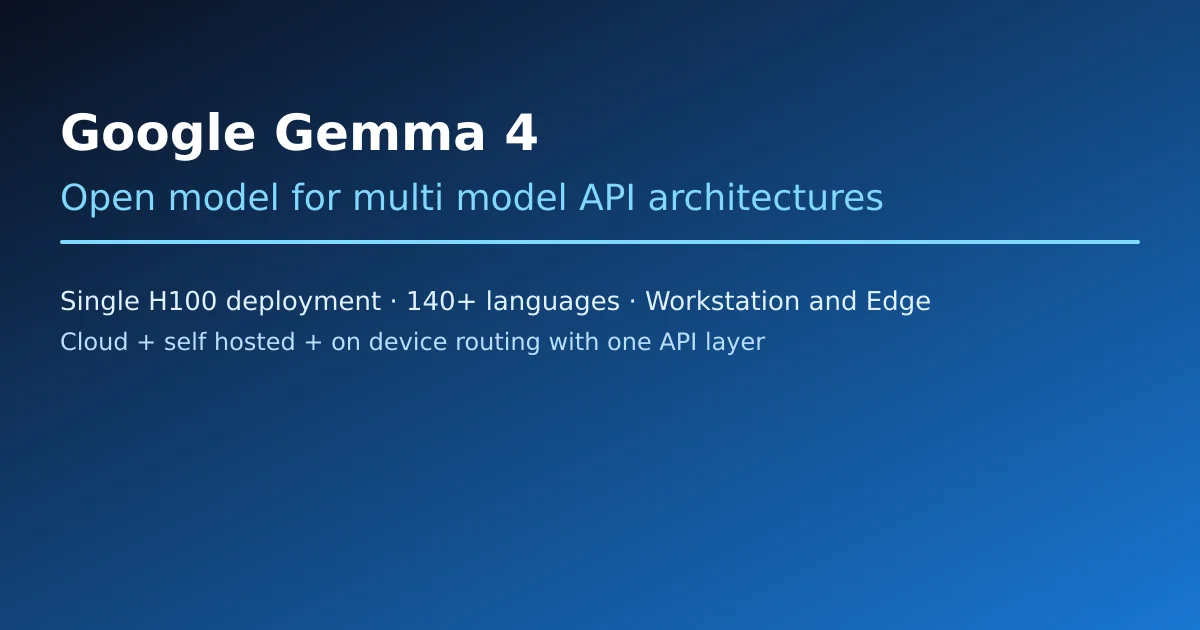
Google's Gemma 4 family delivers open-weight models that run on a single H100 GPU, cover 140+ languages, and ship in both Workstation and Edge variants. Based on public reports, this article explains what Gemma 4 actually offers and how to wire it into a multi-model API architecture (cloud + self-hosted) using NixAPI-style routing and local fallbacks.
#Anthropic
#Claude Code
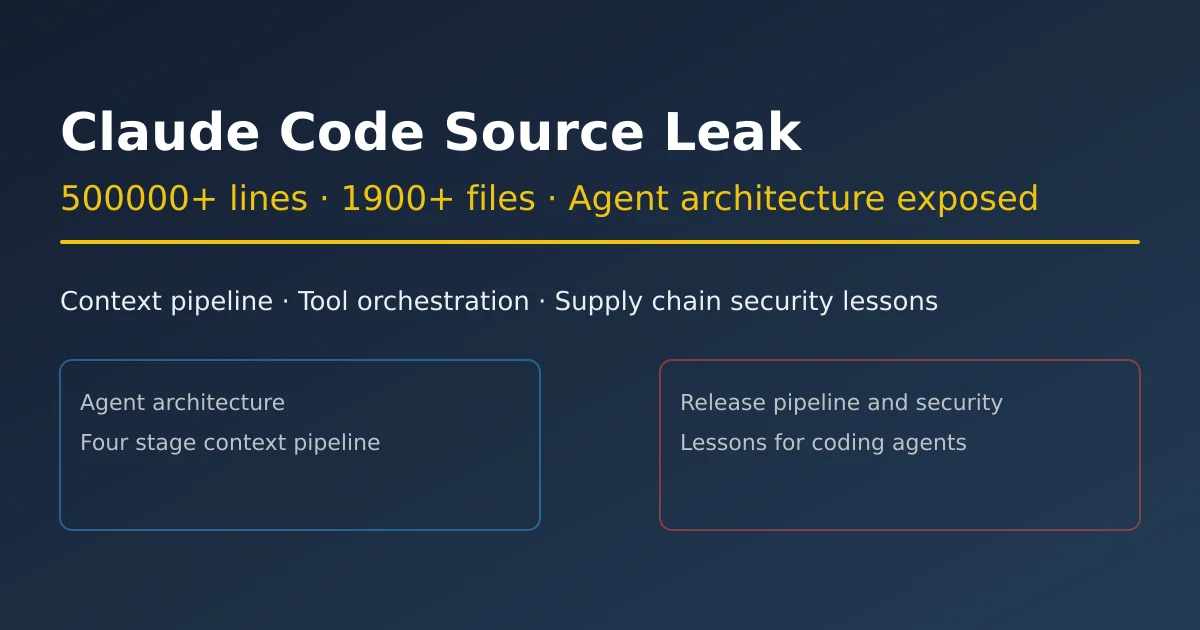
When Anthropic accidentally shipped around 500,000 lines of internal source code and 1,900+ files for Claude Code 2.1.88, it exposed the architecture and context pipeline of a top-tier AI coding assistant—not the model weights. This article, based on reports from Fortune, Axios, LA Times, The Guardian, CNBC, and others, analyzes the design patterns and software supply chain lessons hidden in plain sight.
#Tencent
#ClawPro
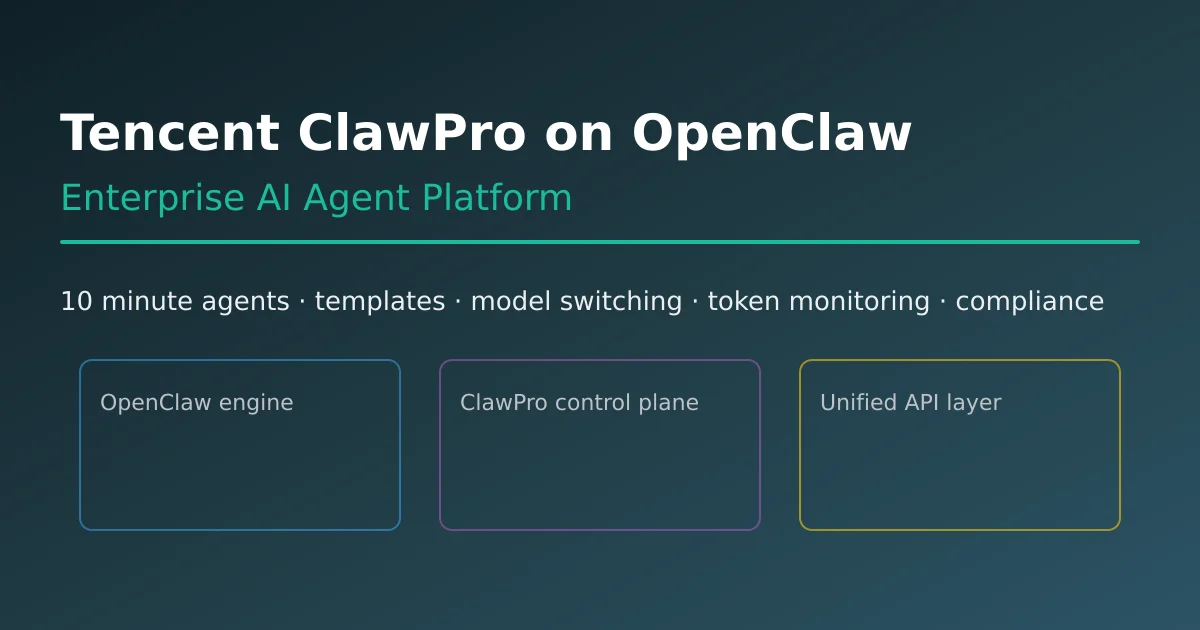
In April 2026, Tencent Cloud launched ClawPro—an enterprise AI agent management platform built on the open-source framework OpenClaw. Promising 10-minute agent deployments, templates, model switching, token usage monitoring, and security/compliance, ClawPro is an early example of a pattern that will likely repeat across clouds. This article, based on reports from The Next Web and others, analyzes what ClawPro means for developers and where platforms like NixAPI still add value.
#Anthropic
#Claude Mythos
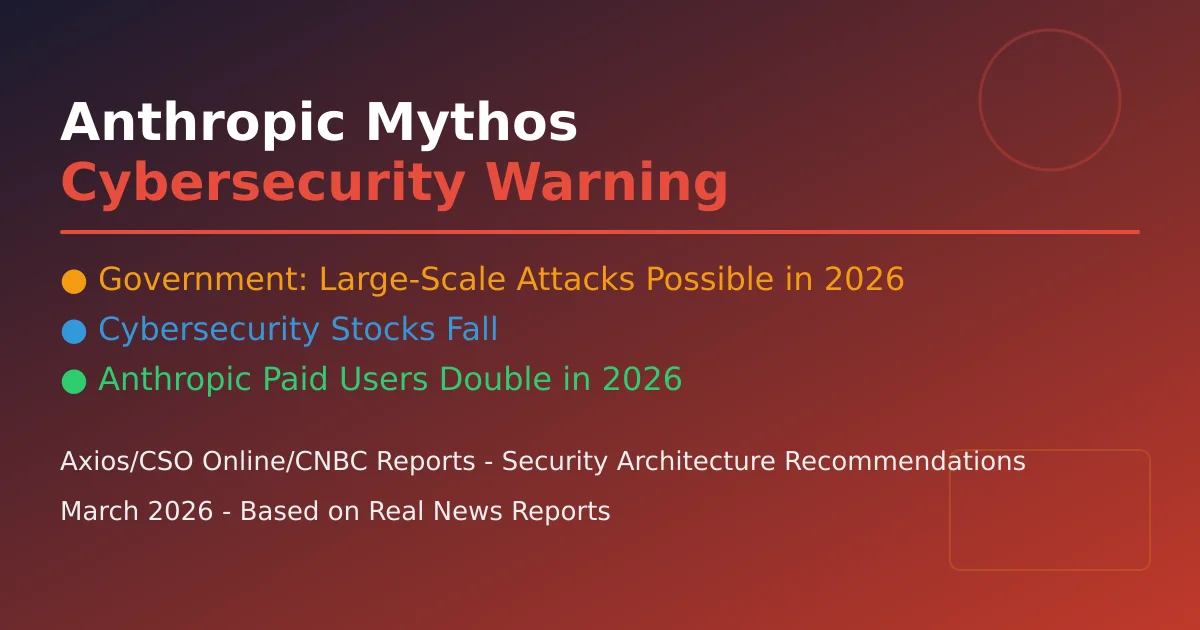
Axios latest report: Anthropic privately warns government officials Claude Mythos makes large-scale cyberattacks much more likely. Cybersecurity stocks fall, CSO reports Mythos targeting enterprise security teams. Analysis based on real reports.
#Anthropic
#Claude Mythos
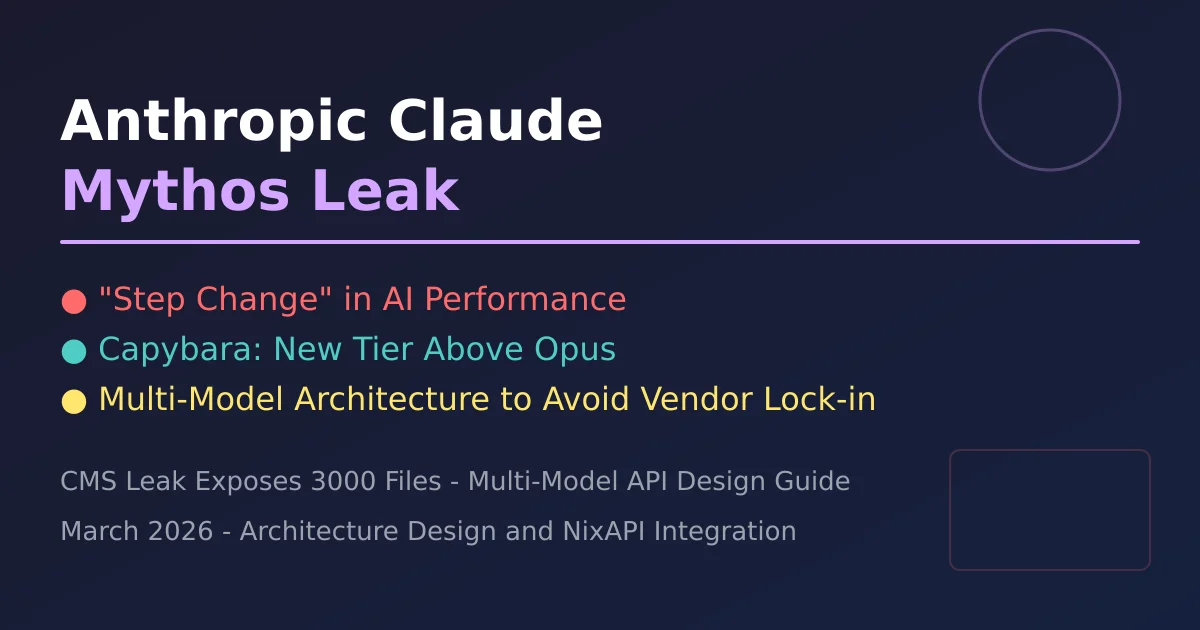
Anthropic confirms testing Claude Mythos, calling it 'most powerful AI model to date'. CMS configuration error exposes nearly 3,000 unpublished files. Analysis of multi-model architecture design, vendor lock-in risks, and NixAPI unified API solutions.
#ByteDance
#Dreamina
ByteDance's Dreamina Seedance 2.0 video generation model officially integrates with CapCut, supporting text/image/video multimodal input. Analysis of productization path, copyright controversies, API opportunities, and comparison with Runway, Pika competitors.
#Google
#Lyria 3 Pro
Google releases Lyria 3 Pro music generation model, supporting 3-minute tracks, fully API-enabled through Vertex AI and Gemini API. Detailed technical features, API integration guide, and comparison with Suno, Udio competitors.
#OpenAI
#Sora
OpenAI announces Sora video app closure, Disney's $1B investment cancelled. In-depth analysis of product risks depending on third-party AI video APIs, with multi-vendor architecture solutions and NixAPI alternative model recommendations (Veo, Seedance, Wan, Kling, etc.).
#Imagen 4
#DALL·E 3
Google Imagen 4, OpenAI DALL·E 3, Midjourney V7 image model APIs are mature. This article explains how to build an automated advertising creative pipeline with multi-model APIs, from requirement input to batch generation, 10x+ efficiency improvement.
#Meta
#Manus
Meta's acquired startup Manus releases desktop app 'My Computer', supporting local file operations, code generation, multi-step automation. In-depth review, comparison with OpenClaw, and developer strategy analysis.
#GEO
#SEO
Quicken and other brands discover SEO advantages don't translate to GEO visibility. This article explains GEO technical principles, visibility API opportunities, and enterprise strategies for AI answer engine traffic acquisition.
#Snowflake
#Project SnowWork
Snowflake releases Project SnowWork research preview, bringing enterprise data platform and AI capabilities directly to business users. Technical architecture, use cases, competitor comparison, and enterprise deployment guide.
#ChatGPT-5.2
#Mathematical Proofs
VUB University researchers demonstrate ChatGPT-5.2 can independently generate original mathematical proofs, solving a 2024 conjecture. Technical analysis and API integration guide included.
#Cursor
#Composer 2
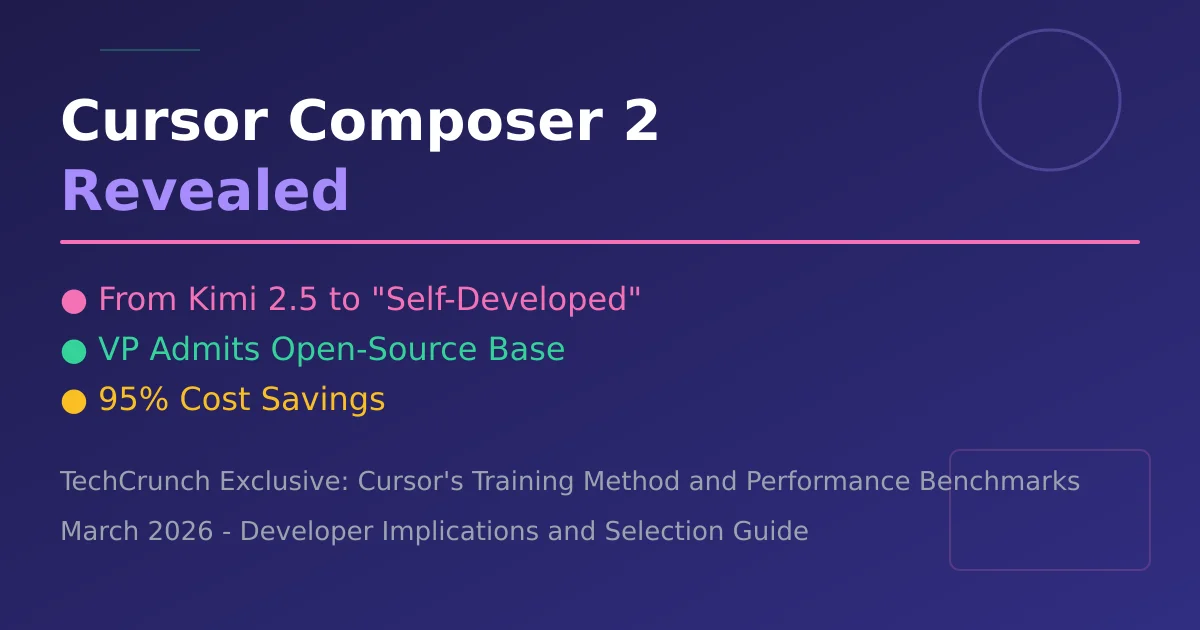
Cursor released Composer 2 claiming 'self-developed', but community questioned it's based on Kimi 2.5 fine-tuning. VP admits open-source base, details RL training, benchmarks, pricing strategy, and developer implications.
#Claude Code
#Channels
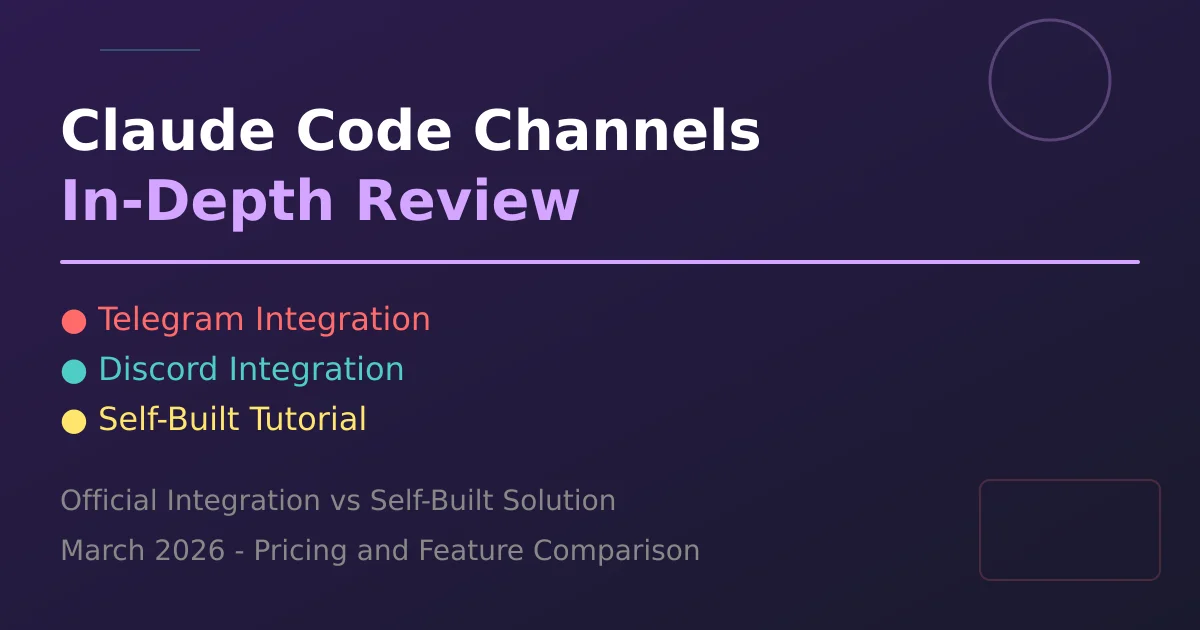
Anthropic just launched Claude Code Channels, supporting Telegram/Discord for AI programming. This review compares features, pricing, and provides a complete self-built tutorial.
#LLM
#API
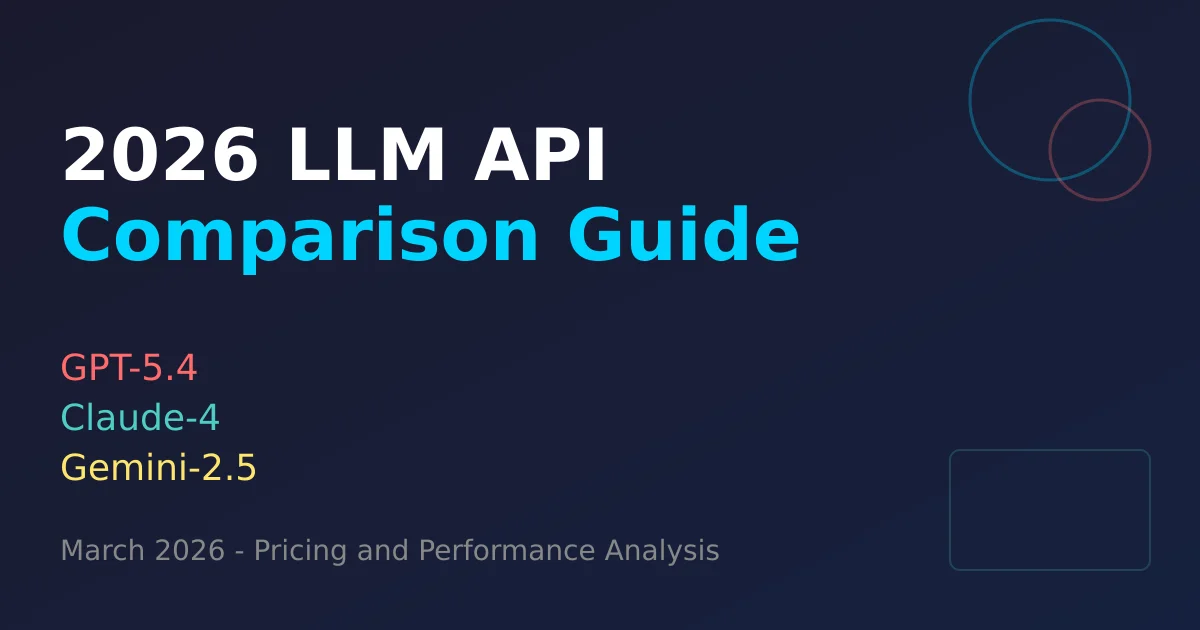
In-depth comparison of mainstream LLM API pricing, performance, latency and use cases, featuring March 2026 latest GPT-5.4 mini/nano benchmark data to help developers choose the optimal solution.
#GPT-5
#GPT-5.4
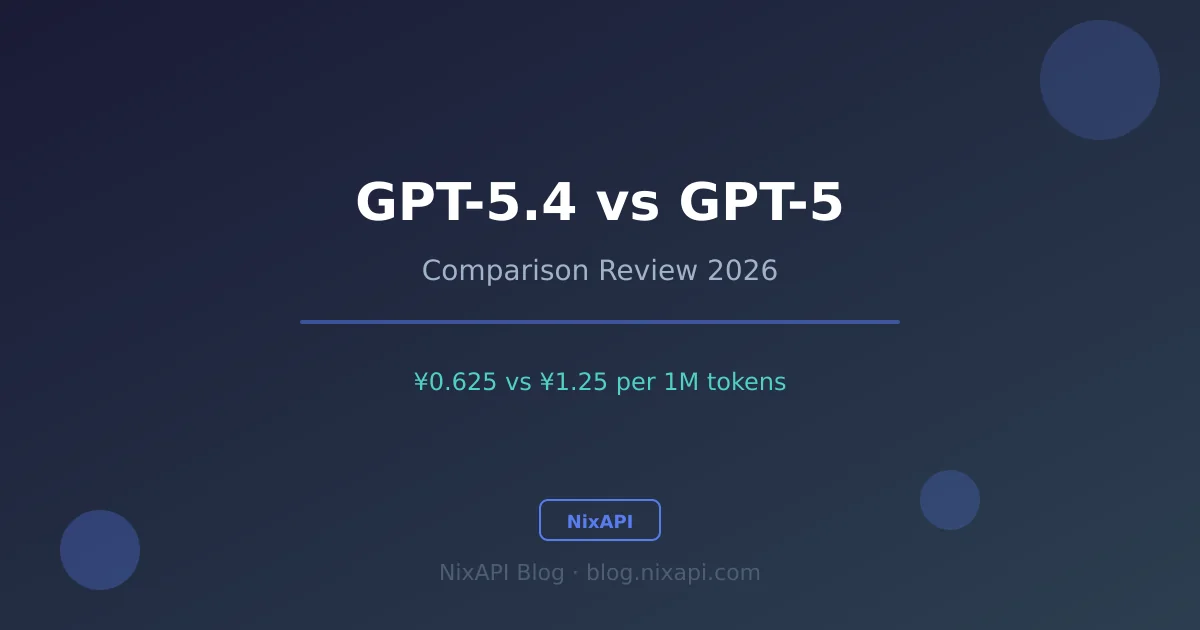
In-depth comparison of GPT-5.4 and GPT-5 performance, pricing, and use cases. Based on NixAPI real data to help you choose the most cost-effective model. Includes code examples and benchmarks.
#OpenClaw
#LLM API
Detailed guide on how to integrate OpenClaw with third-party LLM APIs, including configuration file and conversational methods. Integrate NixAPI for low-cost GPT-5, Claude access.
#OpenAI
#GPT-5
Latest 2026 guide for accessing OpenAI API in China. GPT-5, GPT-4o support, no proxy needed, 1 RMB = 1 USD credit. Complete Python and Node.js code examples.
#Cost Optimization
#Tokens
A practical guide to LLM API pricing, plus proven techniques like prompt compression, model selection, caching, and batch processing to dramatically reduce your API spend — with code examples.
#Streaming
#Python
Learn how to use NixAPI's streaming API to display LLM responses token-by-token in real time. Covers Python, Node.js, and browser-side React implementations with full runnable code.
#Getting Started
#OpenAI
A step-by-step guide to integrating GPT-4o, Claude 3.5, and other leading LLMs through NixAPI, with complete Python and Node.js code examples.